The fascinating realm of robotics unfolds as we delve into the core of “distinction between robotic and android,” a journey into the guts of synthetic intelligence and its tangible manifestations. It is a story of gears and circuits, of silicon and metal, and, more and more, of lifelike pores and skin and empathetic expressions. We’re not simply evaluating machines; we’re exploring the very essence of what it means to be “human” in a world quickly reshaped by know-how.
Get able to embark on an journey the place the strains between the mechanical and the natural start to blur, the place innovation dances with moral issues, and the place the longer term is being constructed, one algorithm at a time.
Think about the whirring of manufacturing facility arms performing repetitive duties with unwavering precision. Image, too, the nuanced actions of a humanoid companion, able to mimicking a smile or providing a comforting phrase. These are however two aspects of a posh panorama. Robots, the workhorses of business and exploration, are sometimes constructed for particular features, prioritizing effectivity and power. Androids, however, attempt for one thing extra bold: to reflect our type, our gestures, and maybe, in the future, our feelings.
Let’s unpack the important thing variations, from their bodily make-up and supposed roles to the intricate dance of intelligence and interplay that defines their existence.
Defining the Phrases
Let’s delve into the fascinating world of robotics and discover the nuances that differentiate a robotic from an android. These phrases are sometimes used interchangeably, however understanding their distinct meanings is essential for appreciating the developments in automation and synthetic intelligence. We’ll uncover the core traits of every and spotlight their particular purposes.
Defining “Robotic” in Automation and Engineering
A robotic, within the realm of automation and engineering, is basically a machine – a bodily entity – designed to carry out duties routinely, typically with minimal human intervention. They’re usually employed to reinforce effectivity, security, and precision in numerous industries. The design and performance of robots are pushed by particular wants, starting from repetitive meeting line operations to intricate surgical procedures.To completely grasp the scope of what defines a robotic, think about the next points:
- Bodily Construction: Robots can tackle an enormous array of varieties, relying on their supposed function. Some are stationary, like robotic arms utilized in factories, whereas others are cellular, resembling autonomous automobiles. This bodily variety underscores their adaptability.
- Programmability: A key characteristic of robots is their potential to be programmed. This programming permits them to execute particular sequences of actions, responding to inputs from sensors and different units. The extent of programming sophistication varies tremendously.
- Automation Capabilities: Robots are constructed to automate duties. This implies they’ll carry out features that might in any other case require human effort, contributing to elevated productiveness and decreased operational prices. They will work tirelessly and persistently.
- Purposes: The purposes of robots are extremely various. They’re prevalent in manufacturing, healthcare, exploration (e.g., rovers on Mars), and even in home settings. Every utility calls for a tailor-made design.
Take into account the robotic arms present in automotive factories. These machines are exactly programmed to weld automobile frames, paint automobile our bodies, and assemble parts. They’re designed for velocity, accuracy, and endurance – qualities that surpass human capabilities in these particular duties.
Defining “Android” Specializing in Humanoid Traits and Look
An android is a selected kind of robotic characterised by its humanoid look and conduct. The first objective in designing an android is to imitate the bodily and cognitive traits of a human being. This pursuit typically entails making a physique that resembles a human type, full with a head, limbs, and a face able to expressing feelings.The important thing options of an android will be understood by way of the next:
- Humanoid Type: Androids are explicitly designed to resemble people. This consists of having a head, torso, arms, and legs. This human-like type is a defining attribute, differentiating them from different varieties of robots.
- Facial Expressions and Gestures: Superior androids are able to displaying a variety of facial expressions and gestures, permitting them to speak and work together in a extra human-like method. That is achieved by way of subtle mechanical and software program methods.
- Social Interplay: The design of androids typically emphasizes their potential to work together socially. They could be programmed to have interaction in conversations, present help, and even exhibit emotional responses.
- Purposes in Analysis and Leisure: Androids are primarily utilized in analysis to review human-robot interplay and within the leisure business. They’re additionally being developed for roles in healthcare and customer support.
For example, think about the android “Sophia,” developed by Hanson Robotics. Sophia is designed to work together with folks, reply questions, and even specific feelings. Its humanoid look and conversational skills make it a primary instance of the android idea.
Evaluating and Contrasting Major Capabilities
The first features of robots and androids are decided by their design and supposed purposes. Whereas there will be overlap, their core focuses differ considerably. Robots are typically designed for effectivity, precision, and job completion, whereas androids emphasize human-like interplay and conduct.The next desk gives a transparent comparability:
| Function | Robotic | Android |
|---|---|---|
| Major Perform | Automation, job completion, effectivity | Human-like interplay, social engagement |
| Look | Varies extensively, typically task-specific | Humanoid, designed to resemble people |
| Key Focus | Efficiency, productiveness, security | Mimicking human conduct, communication |
| Examples | Industrial robots, surgical robots, exploration rovers | Sophia, Geminoid, numerous analysis prototypes |
Robots, like these utilized in manufacturing, are designed to carry out repetitive duties with excessive precision and velocity. Their main perform is to reinforce effectivity and productiveness. Conversely, androids, resembling these utilized in analysis, are centered on human-like interplay. Their function is to simulate human conduct and discover the chances of human-robot relationships.
Bodily Traits and Design
The visible and structural distinctions between robots and androids are elementary to understanding their function and capabilities. Design decisions are closely influenced by perform, supposed interplay, and technological limitations. These decisions, from the supplies used to the general type issue, dictate how these creations navigate the world and work together with people. Let’s delve into the bodily realities that separate these two fascinating technological entities.
Robotic Bodily Types
Robots exhibit an extremely various vary of bodily varieties, formed by their supposed perform and setting. The design prioritizes effectivity and task-specific capabilities over human-like aesthetics.
- Industrial Robots: These are usually giant, typically stationary, and designed for repetitive duties in manufacturing. They typically have robotic arms with a number of levels of freedom, permitting for exact actions in three-dimensional house. Consider the articulated arms welding automobile elements on an meeting line.
- Cell Robots: These robots can transfer round their setting. Examples embrace wheeled robots for warehouse logistics, tracked robots for traversing tough terrain, and legged robots for navigating advanced areas. The Boston Dynamics Spot robotic is a primary instance of a legged cellular robotic.
- Underwater Robots: Designed to function in aquatic environments, these robots typically resemble torpedoes or remotely operated automobiles (ROVs), geared up with cameras, sensors, and manipulators for exploration and information assortment. They’re used for inspecting pipelines, exploring shipwrecks, and finding out marine life.
- Aerial Robots (Drones): Ranging in dimension from small quadcopters to bigger fixed-wing plane, drones are used for surveillance, supply, pictures, and numerous different purposes. Their design prioritizes aerodynamics and maneuverability.
- Service Robots: Designed for duties like cleansing, supply, and help in properties or public areas, these robots can take numerous varieties, together with humanoid-like robots with restricted mobility, or extra specialised designs like robotic vacuum cleaners.
Android Bodily Types
Androids, by definition, are robots designed to resemble people. Their bodily varieties are explicitly engineered to imitate the human physique in look and, ideally, in motion and conduct. The last word objective is usually seamless integration with human environments and interactions.
The pursuit of human likeness drives the design of androids. Nevertheless, reaching excellent realism is a posh and ongoing problem, requiring developments in supplies science, robotics, and synthetic intelligence. At the moment, the diploma of realism varies considerably amongst totally different android fashions.
- Humanoid Robots: These androids are constructed to the human type, with a head, torso, arms, and legs. They’re designed to stroll, speak, and carry out duties which are usually related to people. Examples embrace fashions like Sophia from Hanson Robotics.
- Extremely Life like Androids: Some androids are designed with an emphasis on reasonable pores and skin, facial options, and even refined human actions. They’re typically used for analysis, leisure, and doubtlessly for offering care and companionship.
- Practical Androids: These androids prioritize perform over excellent realism, however nonetheless incorporate human-like components. They could be utilized in medical simulations, schooling, or different areas the place a human-like look is useful.
Supplies Utilized in Development
The supplies utilized in establishing robots and androids are essential to their performance, sturdiness, and look. They decide the robotic’s power, flexibility, weight, and talent to face up to environmental situations.
The selection of supplies is pushed by elements resembling price, weight, power, and the precise utility of the robotic or android. The event of recent supplies is consistently pushing the boundaries of what’s doable in robotics.
- Metals: Aluminum, metal, and titanium are generally used for structural parts, offering power and sturdiness. Metal is used for heavy-duty purposes like industrial robots, whereas aluminum is most popular for lighter purposes like drones. Titanium presents a excessive strength-to-weight ratio and is usually utilized in specialised robots.
- Plastics: Plastics, resembling polycarbonate and ABS, are used for housings, covers, and different parts. They’re light-weight, comparatively cheap, and will be molded into advanced shapes. Plastics are sometimes chosen for his or her resistance to corrosion and their potential to face up to affect.
- Composites: Carbon fiber composites are more and more used for his or her excessive strength-to-weight ratio, making them ideally suited for light-weight and robust robotic parts. They’re utilized in drones, robotic arms, and different purposes the place weight is a crucial issue.
- Elastomers: Artificial rubbers and silicones are used for versatile parts, resembling seals, gaskets, and even synthetic pores and skin for androids. They supply flexibility, cushioning, and resistance to environmental elements.
- Superior Supplies: Analysis and improvement in supplies science are resulting in using new supplies, resembling form reminiscence alloys, which may change form in response to temperature adjustments, and sensible supplies that may react to stimuli like gentle or stress.
Evaluating Robotic and Android Bodily Attributes
The next desk gives a concise comparability of key bodily attributes of robots and androids, highlighting the distinctions of their design and performance.
| Attribute | Robotic | Android |
|---|---|---|
| Form | Extremely variable, optimized for perform; might embrace arms, legs, wheels, tracks, or specialised appendages. | Human-like type (humanoid), with head, torso, limbs, and sometimes facial options. |
| Measurement | Ranges from microscopic (nanobots) to very giant (industrial robots). | Sometimes human-sized, although dimension can differ based mostly on function. |
| Mobility | Numerous, together with stationary, wheeled, tracked, legged, flying, or underwater propulsion methods. | Primarily bipedal (strolling on two legs) or bipedal with wheeled help. |
| Look | Usually utilitarian; look is secondary to perform. Might have uncovered mechanisms and parts. | Designed to imitate human look, together with pores and skin, facial options, and clothes (typically). |
| Sensors | Big selection of sensors (cameras, proximity sensors, pressure sensors, and many others.) tailor-made to the robotic’s job. | Sensors much like robots, plus sensors designed to imitate human senses (imaginative and prescient, listening to, contact). |
| Supplies | Metals (metal, aluminum, titanium), plastics, composites, elastomers. | Metals, plastics, composites, elastomers, with a rising emphasis on supplies that mimic human pores and skin and tissue. |
Performance and Goal

Let’s delve into the core of what distinguishes robots and androids: their supposed use. This is not nearly what they
- can* do, however
- why* they had been created within the first place. Understanding their function illuminates the basic variations that form their design, capabilities, and the roles they play in our world.
Industrial Purposes of Robots
Robots, the workhorses of the fashionable age, are predominantly present in industrial settings, the place they carry out duties which are typically repetitive, harmful, or require excessive precision. They’re engineered to maximise effectivity, scale back human error, and increase productiveness.Robots excel in a wide range of industrial purposes, together with:
- Manufacturing: Robots are the spine of many manufacturing processes, from automotive meeting strains to electronics manufacturing. They will weld, paint, assemble parts, and examine merchandise with unimaginable velocity and accuracy. Think about a automobile manufacturing facility the place robotic arms tirelessly weld chassis elements, working in excellent synchronicity, day and evening.
- Materials Dealing with: Robots effectively transfer supplies inside factories and warehouses. This consists of selecting and packing items, loading and unloading vans, and transporting gadgets throughout huge distances. Image a distribution heart the place robotic forklifts navigate aisles, retrieving and delivering pallets of merchandise with minimal human intervention.
- Welding and Portray: Robots are often utilized in environments which are harmful or disagreeable for people, like welding and portray. They will carry out these duties with constant high quality and accuracy, defending human employees from dangerous fumes and excessive temperatures.
- Inspection and High quality Management: Robots geared up with superior sensors and imaginative and prescient methods meticulously examine merchandise for defects, making certain high-quality requirements. Consider robots scrutinizing circuit boards for microscopic flaws or checking the scale of manufactured elements with laser precision.
Purposes of Androids in Analysis and Leisure
Androids, designed to imitate human look and conduct, primarily serve in analysis and leisure. They’re typically used as platforms for finding out human-robot interplay, exploring synthetic intelligence, and creating immersive leisure experiences. They bridge the hole between human and machine in ways in which robots, by design, can not.Androids have discovered their area of interest within the following areas:
- Human-Robotic Interplay Analysis: Androids are invaluable instruments for researchers finding out how people work together with machines. Their human-like options and actions enable scientists to watch and analyze social cues, communication patterns, and emotional responses in a managed setting. Take into account a analysis lab the place an android interacts with a human participant, serving to to know how folks understand and reply to robotic empathy.
- Leisure: Androids are more and more utilized in theme parks, museums, and different leisure venues to create reasonable and interesting experiences. They will act, sing, dance, and work together with audiences, blurring the strains between actuality and fiction. Visualize a theme park the place androids painting historic figures, fascinating guests with their lifelike performances and interesting narratives.
- Healthcare: Androids are being developed to help in healthcare, resembling offering companionship for aged sufferers or serving to with bodily remedy workout routines. They will provide emotional help, remind sufferers to take treatment, and monitor very important indicators. Think about an android caregiver interacting with an aged affected person, offering companionship, and alerting medical professionals to any well being issues.
- Schooling: Androids are utilized in instructional settings to show languages, present interactive classes, and help college students with particular wants. They will create a extra partaking and customized studying expertise. Consider an android tutor serving to a scholar study a brand new language, offering pronunciation steerage and interactive workout routines.
Particular Duties Robots Excel At
Robots are programmed to carry out extremely specialised duties with precision and effectivity. Their design prioritizes performance and efficiency in a managed setting.Listed below are some examples of duties the place robots are designed to excel:
- Precision Welding: Robots can weld with pinpoint accuracy, making certain robust and constant joints in manufacturing processes. They will weld for hours with out fatigue, producing constant outcomes.
- Repetitive Meeting: Robots can repeatedly assemble parts with velocity and accuracy, resembling attaching screws or inserting elements. This frees human employees from tedious duties.
- Hazardous Materials Dealing with: Robots can safely deal with harmful supplies, resembling chemical compounds or radioactive substances, minimizing human publicity to danger.
- Heavy Lifting: Robots are used to raise and transfer heavy objects, resembling automobile elements or pallets of products, decreasing the danger of office accidents.
Particular Duties Androids Are Designed to Carry out, Specializing in Human Interplay, Distinction between robotic and android
Androids are designed to work together with people in ways in which robots can not, resembling displaying feelings, partaking in conversations, and mimicking human behaviors. Their focus is on creating a practical and interesting expertise.Listed below are some examples of duties androids are designed to carry out, specializing in human interplay:
- Offering Buyer Service: Androids can greet clients, reply questions, and supply help in retail shops, motels, and different companies. They will provide a personalised expertise and liberate human employees.
- Providing Companionship: Androids can present companionship to aged or remoted people, partaking in conversations, taking part in video games, and providing emotional help.
- Helping in Healthcare: Androids can help healthcare professionals by interacting with sufferers, offering reminders, and monitoring very important indicators. They will present consolation and help to sufferers.
- Performing in Leisure: Androids can carry out in motion pictures, theater productions, and different leisure venues, fascinating audiences with their reasonable performances.
Situations for Robotic and Android Collaboration
The way forward for robotics possible entails collaboration between robots and androids. Combining the strengths of every kind of machine creates synergistic prospects.Take into account these situations the place robots and androids may doubtlessly collaborate:
- Manufacturing with Human-Robotic Interplay: An android may work alongside robots on an meeting line. The robots may deal with the heavy lifting and exact duties, whereas the android, with its potential to work together with people, may oversee high quality management, talk with human employees, and make changes as wanted.
- Healthcare with Android-Robotic Groups: An android may present companionship and fundamental take care of aged sufferers at residence, whereas a robotic may deal with extra bodily demanding duties, resembling delivering treatment or helping with mobility.
Image an aged affected person at residence, cared for by an android companion that provides emotional help and reminders for treatment. If the affected person requires help with mobility, a robotic assistant may gently assist them arise or stroll. The android would additionally monitor the affected person’s very important indicators and alert medical professionals if there are any well being issues.
- Catastrophe Response with Coordination: In a catastrophe state of affairs, robots may very well be deployed to seek for survivors in harmful environments, whereas androids may act as communication hubs, interacting with survivors and relaying data to rescue groups.
Take into account a collapsed constructing after an earthquake. Small, agile robots may navigate the rubble, trying to find survivors. Concurrently, an android may very well be stationed at a protected location, speaking with survivors discovered by the robots, relaying their must rescue groups, and offering emotional help.
- Schooling with Personalised Studying: An android tutor may present customized instruction and help to college students, whereas robots may deal with duties resembling grading papers or establishing experiments.
Think about a classroom the place an android tutor interacts with college students, offering customized classes based mostly on their particular person studying kinds and paces. Robots may deal with administrative duties, resembling grading assignments or establishing experiments, releasing up the human instructor to deal with scholar interplay and steerage.
Think about an meeting line the place robotic arms carry out the intricate welding and element placement, and an android supervisor walks the road, offering suggestions to the robots and speaking with the human employees about any points. The android may use its superior imaginative and prescient system to establish defects, talk with human employees to deal with any issues, and even provide recommendations for course of enhancements.
Intelligence and Autonomy

Let’s delve into the fascinating realm of how robots and androids “suppose” and act independently. Understanding their intelligence and autonomy is vital to appreciating the capabilities and limitations that distinguish these technological marvels. We’ll discover the totally different ranges of self-governance, the methods they course of data, and the way they make selections.
Ranges of Autonomy in Trendy Robots
Robots exhibit a spectrum of autonomous capabilities, starting from easy pre-programmed actions to stylish AI-driven behaviors. The extent of autonomy straight impacts the robotic’s potential to work together with its setting and carry out duties.
- Pre-programmed Robots: These robots function based mostly on a hard and fast set of directions. Their actions are predetermined, they usually lack the flexibility to adapt to surprising conditions. An instance of that is an assembly-line robotic in a automobile manufacturing facility, which repeats the identical welding job on every automobile physique. Their selections are based mostly on the preliminary program.
- Semi-Autonomous Robots: These robots mix pre-programmed actions with some extent of environmental consciousness. They could use sensors to detect obstacles or alter their actions. Take into account a self-guided lawnmower that navigates a yard, avoiding timber and different objects. The robotic reacts to the info obtained from sensors.
- AI-Pushed Robots: These robots are geared up with synthetic intelligence, permitting them to study, adapt, and make advanced selections. They will analyze information, acknowledge patterns, and modify their conduct based mostly on expertise. For example, a robotic surgeon would possibly use AI to investigate affected person information, plan surgical procedures, and even make changes in the course of the operation. Their decision-making relies on AI algorithms and studying fashions.
Ranges of Autonomy in Androids
Androids, typically designed to imitate human look and conduct, possess a excessive diploma of autonomy, significantly of their potential to study and adapt. Their intelligence is often based mostly on superior AI methods.
- Studying and Adaptation: Androids are designed to study from their interactions with the setting and the info they obtain. They are often educated to carry out new duties, enhance their efficiency, and adapt to altering situations. Think about an android that begins to know human feelings by observing facial expressions and tone of voice.
- Advanced Determination-Making: Androids could make advanced selections based mostly on their programming, realized data, and real-time information evaluation. Their potential to course of data and cause permits them to navigate advanced social conditions or remedy intricate issues. Consider an android interacting with an individual, understanding the subtleties of human language and social cues to reply appropriately.
- Human-Like Interplay: Androids attempt to work together with people in a pure and intuitive method. They could be programmed with emotional intelligence and the flexibility to know and reply to human feelings. An excellent instance is a social android that engages in conversations, gives companionship, and presents help in numerous each day duties.
Comparability of Determination-Making Processes: Robots vs. Androids
The choice-making processes of robots and androids differ considerably, reflecting their distinct design philosophies and capabilities.
| Function | Robotic | Android |
|---|---|---|
| Determination Foundation | Pre-programmed directions, sensor information, and restricted AI. | AI algorithms, realized data, emotional intelligence, and sophisticated information evaluation. |
| Adaptability | Restricted; primarily reacts to pre-defined parameters. | Excessive; can study, adapt, and evolve over time. |
| Complexity | Typically less complicated, centered on particular duties. | Extra advanced, able to dealing with multifaceted conditions. |
| Emotional Understanding | Sometimes missing, except particularly programmed. | Might possess emotional intelligence and the flexibility to interpret and reply to human feelings. |
Position of Sensors and Information Processing
Sensors and information processing are the cornerstones of intelligence and autonomy in each robots and androids. They permit these machines to understand their setting, collect data, and make knowledgeable selections.
- Sensors: Robots and androids make the most of a wide range of sensors, together with cameras, microphones, ultrasonic sensors, and tactile sensors, to assemble information about their environment. These sensors present the uncooked data wanted for decision-making. For example, a robotic designed to navigate a warehouse would possibly use cameras to establish objects and keep away from collisions.
- Information Processing: The information collected by sensors is processed utilizing subtle algorithms and AI methods. This entails filtering, analyzing, and deciphering the info to extract significant data. For instance, an android would possibly use pure language processing to know spoken instructions or pc imaginative and prescient to acknowledge faces.
- Suggestions Loops: Sensors and information processing work collectively in suggestions loops. The robotic or android makes use of the processed information to make selections and take actions. The result of these actions is then monitored by the sensors, and the method repeats, permitting the machine to study and adapt over time.
Human-Robotic Interplay: Distinction Between Robotic And Android
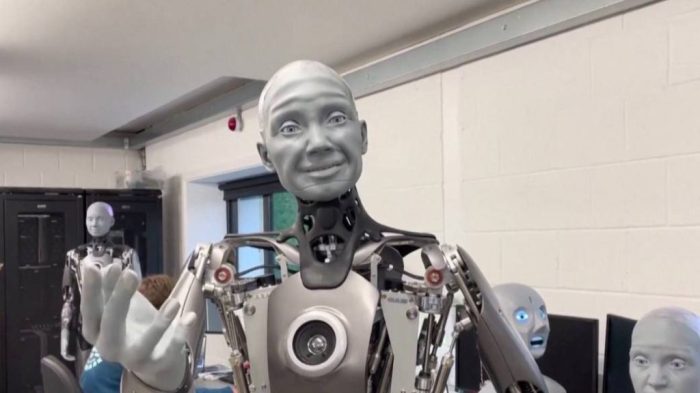
Let’s delve into the fascinating realm of how people and these technological marvels, robots and androids, bridge the communication hole. The methods they work together are various and always evolving, shaping our experiences and the very cloth of our relationship with these creations.
Strategies of Robotic-Human Interplay
Robots make use of a wide range of strategies to speak with people, every tailor-made to particular duties and environments. These strategies are designed to facilitate environment friendly and efficient interplay, making certain that people can perceive and reply appropriately.
- Voice Communication: Many robots use voice synthesis to talk and voice recognition to know spoken instructions. Consider your sensible residence units or the useful robots in warehouses directing employees. It is a widespread and intuitive methodology.
- Visible Shows: Screens, LEDs, and projected photographs enable robots to convey data visually. These shows can vary from easy standing indicators to advanced graphical interfaces, offering information at a look.
- Haptic Suggestions: Some robots incorporate contact sensors and actuators to offer tactile suggestions. This enables for a extra direct and intuitive interplay, particularly in duties involving manipulation or manipulation of objects. For instance, surgical robots use haptic suggestions to permit surgeons to “really feel” the tissues they’re working on.
- Gestural Recognition: Superior robots can interpret human gestures, resembling hand actions or physique language, to know instructions or intentions. This will result in a extra pure and fluid interplay.
- Bodily Interplay: Some robots are designed for direct bodily interplay, resembling collaborative robots (cobots) that work alongside people in manufacturing. These robots are sometimes geared up with security options to forestall damage.
Strategies of Android-Human Interplay
Androids, aiming for a extra human-like expertise, deal with pure and nuanced strategies of interplay. Their communication methods are designed to reflect the methods people work together with one another, creating a way of familiarity and connection.
- Superior Voice Synthesis and Recognition: Androids make use of subtle voice methods able to producing natural-sounding speech, full with intonation and emotional cues. Additionally they excel at understanding advanced and nuanced language.
- Facial Expressions and Physique Language: Androids are sometimes geared up with actuators and sensors that enable them to imitate human facial expressions and physique language. This enhances their potential to convey feelings and intentions. Think about a robotic that may subtly smile or furrow its forehead.
- Eye Contact and Gaze Following: Some androids are designed to make eye contact and comply with the gaze of people, creating a way of direct engagement and connection.
- Emotional Recognition and Response: Superior androids can acknowledge human feelings by way of facial expressions, voice tone, and even physiological information. They will then reply with acceptable emotional shows, fostering a extra empathetic interplay.
- Pure Language Processing: Androids leverage subtle pure language processing (NLP) to know and reply to human language in a extra fluid and conversational method. This permits them to have interaction in advanced discussions and supply related data.
Profitable Human-Robotic Interactions in Varied Fields
Human-robot interplay has confirmed to achieve success in various fields, enhancing effectivity, security, and high quality of life. The affect of those interactions continues to develop.
- Healthcare: Surgical robots help surgeons with advanced procedures, providing higher precision and minimally invasive methods. Robots are additionally used for affected person care, treatment supply, and rehabilitation.
- Manufacturing: Collaborative robots (cobots) work alongside human employees on meeting strains, enhancing effectivity and decreasing the danger of damage.
- Logistics and Warehousing: Autonomous robots are used for choosing, packing, and transporting items, streamlining warehouse operations.
- Buyer Service: Chatbots and repair robots present buyer help, reply questions, and help with numerous duties.
- Exploration and Analysis: Robots are used to discover hazardous environments, resembling underwater or house, and to conduct scientific analysis.
- Schooling: Instructional robots are utilized to have interaction college students in STEM topics and supply customized studying experiences.
Moral Concerns Surrounding Human Interplay with Androids, Particularly Regarding Emotional Responses
The growing sophistication of androids raises crucial moral questions, significantly in regards to the potential for people to develop emotional attachments and responses. These issues demand cautious thought and ongoing dialogue.
- Authenticity of Feelings: If an android mimics feelings, does that create a false sense of connection? Is it moral to design androids that exploit human vulnerabilities for emotional connection?
- Dependency and Social Isolation: Over-reliance on android companions may doubtlessly result in social isolation and a diminished capability for real human relationships.
- Deception and Misinterpretation: The flexibility of androids to convincingly mimic human conduct may result in deception and misinterpretation of their intentions.
- Privateness and Information Safety: Androids, particularly these geared up with superior sensors and AI, accumulate an enormous quantity of non-public information. How will we guarantee privateness and information safety?
- The “Uncanny Valley” Impact: Androids which are virtually, however not fairly, human-like can evoke emotions of unease and revulsion, generally known as the “uncanny valley.” This will create unfavourable emotional responses in people.
- Accountability and Accountability: Who’s accountable if an android’s actions trigger hurt? How will we maintain them accountable?
- The Way forward for Human Relationships: As androids turn out to be extra built-in into our lives, how will this affect the character of human relationships, empathy, and social interplay?
Programming and Management
The digital dance between people and their robotic creations, and the much more subtle interactions with androids, hinges on the artwork and science of programming. It is the language we use to instruct these machines, shaping their actions, reactions, and general capabilities. From easy duties to advanced behaviors, programming gives the inspiration for his or her existence and interplay with the world.
Widespread Programming Languages for Robots
Robots, like their human counterparts, communicate in numerous tongues. Selecting the best language will depend on the robotic’s function and the complexity of its duties.Listed below are among the mostly employed languages:
- C/C++: These languages are sometimes favored for his or her effectivity and management over {hardware}. They permit for low-level entry, making them ideally suited for duties requiring exact timing and useful resource administration, resembling controlling a robotic’s motors or sensors. Take into account the Mars rovers; their core methods are closely reliant on C/C++ for strong and dependable operation in difficult environments.
- Python: Python has gained immense reputation in robotics on account of its readability and intensive libraries. Its versatility makes it appropriate for a variety of purposes, from fundamental robotic management to superior machine studying algorithms. Its ease of use has made it a favourite amongst robotics lovers and researchers alike.
- Java: Java presents platform independence, that means code written in Java can run on totally different working methods with out modification. This makes it a sensible choice for robots that have to function throughout various {hardware} platforms.
- ROS (Robotic Working System): Though not a programming language itself, ROS is a strong framework that gives instruments and libraries for constructing and managing robotic software program. It helps numerous programming languages, together with C++, Python, and Java, making it a central hub for robotic improvement. ROS streamlines communication between totally different robotic parts, enabling modular and scalable designs.
- MATLAB/Simulink: These instruments are sometimes used for simulation and management system design. They permit engineers to mannequin robotic conduct, take a look at management algorithms, and generate code for deployment on robots.
Programming Approaches for Android Behaviors
Androids, designed to imitate human conduct, require a extra nuanced programming method than conventional robots. This typically entails methods that enable for studying and adaptation.Here is a have a look at the programming approaches used:
- Rule-Based mostly Methods: These methods depend on predefined guidelines and situations to manipulate an android’s conduct. When a sure situation is met (e.g., a selected voice command), the android executes a corresponding motion. This method is comparatively simple to implement however can turn out to be advanced and tough to handle because the variety of guidelines will increase.
- Machine Studying (ML): ML permits androids to study from information and enhance their efficiency over time. It is a essential component in creating reasonable and adaptable behaviors.
- Supervised Studying: The android is educated on a labeled dataset, the place every enter is related to a desired output. For instance, the android could be proven photographs of various facial expressions and study to establish them.
- Unsupervised Studying: The android learns from unlabeled information, figuring out patterns and buildings with out specific steerage. For example, an android may analyze a big assortment of conversations to establish widespread matters and communication kinds.
- Reinforcement Studying: The android learns by way of trial and error, receiving rewards for fascinating actions and penalties for undesirable ones. That is significantly helpful for duties like navigation or object manipulation.
- Pure Language Processing (NLP): NLP permits androids to know and reply to human language. This entails methods like speech recognition, textual content evaluation, and pure language era.
- Pc Imaginative and prescient: Pc imaginative and prescient permits androids to “see” and interpret the world round them. This entails picture processing, object recognition, and scene understanding.
Simplified Process for Programming a Fundamental Robotic Activity
Making a robotic to carry out a easy job could be a rewarding expertise. Here is a simplified process:
- Outline the Activity: Clearly specify what the robotic must do. For instance, “transfer ahead 1 meter.”
- Select the Programming Language: Choose a language appropriate in your robotic and the duty (e.g., Python for its ease of use).
- Write the Code: Write this system directions.
Instance (Python):
  import time
  # Assuming you may have features to regulate the robotic's motors:
  def move_forward(distance):
           # Code to regulate motors to maneuver ahead
           time.sleep(distance / velocity) # Regulate for robotic's velocity
move_forward(1) # Transfer ahead 1 meter - Take a look at and Debug: Run the code and observe the robotic’s conduct. Appropriate any errors (bugs) that stop the duty from being carried out appropriately.
- Refine and Iterate: Modify the code to enhance the robotic’s efficiency or add extra options.
Simplified Process for Designing and Implementing a Fundamental Android Response to a Easy Human Enter
Constructing an android response, even a easy one, requires a multi-faceted method.Here is a simplified process:
- Outline the Enter and Response: Decide the kind of human enter (e.g., a easy voice command) and the specified android response (e.g., a selected phrase).
- Select the Instruments: Choose the mandatory instruments, resembling speech recognition software program, a text-to-speech engine, and a programming language.
- Implement Enter Processing: Use speech recognition to transform the human voice command into textual content.
- Implement Response Technology: Create the code to generate the suitable textual content response based mostly on the acknowledged command.
- Implement Output: Use a text-to-speech engine to transform the response textual content into spoken phrases.
- Take a look at and Refine: Take a look at the system with totally different inputs and refine the code to enhance accuracy and naturalness. For instance, think about an android designed to reply the query, “What’s the climate at present?” It’d use a climate API to retrieve the knowledge after which reply with a pre-programmed sentence resembling, “The climate at present is sunny with a excessive of 25 levels Celsius.”
Future Tendencies and Developments
The way forward for robotics and androids guarantees an enchanting evolution, pushed by relentless innovation and a need to reinforce human capabilities and interactions. We’re on the cusp of witnessing breakthroughs that can redefine the boundaries of what is doable, resulting in profound societal shifts and creating alternatives we will barely think about at present.
Projecting Robotics Evolution: Mobility and Dexterity
Robotics is poised for a leap ahead, significantly in areas of mobility and dexterity. These developments will revolutionize industries, from manufacturing to healthcare, and remodel how we work together with the world round us.
- Enhanced Locomotion: Robots will transfer with higher agility and effectivity. This consists of:
- Superior legged robots: Mimicking animal gaits, resembling Boston Dynamics’ Spot, will navigate advanced terrains with ease, offering essential help in search and rescue operations or environmental monitoring. Think about a robotic cheetah effortlessly traversing rubble after an earthquake, trying to find survivors.
- Improved wheeled and tracked methods: Using superior supplies and sensor integration, these robots will obtain superior velocity and maneuverability. Consider self-driving supply robots effectively navigating metropolis streets, optimizing logistics and decreasing visitors congestion.
- Dexterous Manipulation: Robots will develop human-like dexterity. This entails:
- Multi-fingered robotic fingers: Able to greedy and manipulating objects of various styles and sizes with precision. That is essential for delicate duties like surgical procedure or assembling intricate digital parts. Think about a surgeon utilizing robotic arms with unimaginable precision, minimizing invasiveness and enhancing affected person outcomes.
- Adaptive greedy algorithms: Permitting robots to routinely alter their grip based mostly on object properties. This might result in robots that may deal with any merchandise in a warehouse, enhancing automation and decreasing labor prices.
- Comfortable Robotics: A brand new paradigm in robotics will emerge.
- Versatile supplies: Robots created from delicate, pliable supplies, resembling silicone and elastomers, can be safer for human interplay and in a position to navigate tight areas. Think about delicate, squishy robots utilized in minimally invasive medical procedures.
- Adaptive buildings: Permitting robots to alter form and adapt to their setting. This might result in robots that may squeeze by way of slim gaps or conform to irregular surfaces.
Projecting Androids Evolution: Synthetic Intelligence and Emotional Expression
Androids will endure transformative adjustments, with essentially the most important developments occurring in synthetic intelligence and emotional expression. These developments will convey androids nearer to human-like capabilities and redefine their roles in society.
- Superior Synthetic Intelligence: Androids will possess subtle cognitive skills. This can be realized by way of:
- Deep studying and neural networks: Enabling androids to study from huge datasets, acknowledge patterns, and make advanced selections. Think about androids that may present customized schooling, tailoring studying experiences to particular person scholar wants.
- Pure language processing: Permitting androids to know and generate human language with fluency and nuance. This is able to allow androids to function companions, therapists, or language tutors.
- Reasoning and problem-solving capabilities: Giving androids the flexibility to investigate conditions, draw inferences, and remedy issues independently.
- Emotional Expression and Social Intelligence: Androids will develop the flexibility to exhibit and perceive human feelings. This entails:
- Facial features recognition: Precisely figuring out and deciphering human feelings based mostly on facial cues. Think about androids used as caregivers who can detect indicators of misery or happiness in sufferers.
- Artificial feelings: Creating reasonable and acceptable emotional responses in androids. This is able to make them extra relatable and empathetic.
- Social consciousness and empathy: Permitting androids to know social dynamics and reply appropriately to human interactions.
- Human-Android Interplay: Communication between androids and people will turn out to be seamless.
- Holographic projections: Projecting androids as life-sized, three-dimensional photographs, making a extra immersive and interesting interplay.
- Mind-computer interfaces: Permitting direct communication between the human mind and the android, doubtlessly enabling thought-controlled actions and intuitive interactions.
Blurring the Strains: Potential Breakthroughs
Breakthroughs are on the horizon that might basically alter the excellence between robots and androids. These developments will result in the emergence of recent types of synthetic intelligence and bodily embodiment.
- Bio-integrated Robotics: Merging organic parts with robotic methods.
- Biologically-inspired designs: Robots modeled after organic methods, utilizing organic supplies and processes. Think about robots that may self-repair or adapt to altering environments.
- Mind-computer interfaces: Immediately connecting the human mind to robotic methods, enabling intuitive management and enhanced cognitive skills.
- Synthetic Normal Intelligence (AGI): The event of AGI could be a watershed second.
- Human-level intelligence: Machines that may carry out any mental job {that a} human being can.
- Self-awareness and consciousness: AGI may doubtlessly possess self-awareness and consciousness, elevating profound moral questions.
- Superior Supplies and Manufacturing: Creating extra reasonable and purposeful androids and robots.
- Self-healing supplies: Permitting robots and androids to restore themselves.
- 3D-printed organs: Utilizing 3D printing to create reasonable and purposeful physique elements.
Futuristic Situation: Coexisting Society
Think about a future the place robots and androids are built-in into each side of society, every taking part in distinct, but complementary roles. This coexistence could be characterised by a harmonious mix of know-how and human interplay.
On this future:
- Robots: Robots will primarily deal with repetitive, harmful, or bodily demanding duties.
- Manufacturing and Logistics: Robots will work in factories and warehouses, assembling merchandise, transporting items, and optimizing provide chains. Image a totally automated manufacturing facility the place robots assemble vehicles with unmatched precision and velocity.
- Infrastructure and Upkeep: Robots will construct and preserve infrastructure, from bridges and roads to energy grids and communication networks. Think about a swarm of small robots autonomously repairing a broken part of a bridge.
- Exploration and Analysis: Robots will discover hazardous environments, resembling deep-sea trenches, outer house, and contaminated areas.
- Androids: Androids can be built-in into roles requiring advanced social interactions, emotional intelligence, and creativity.
- Healthcare: Androids will help in affected person care, present companionship to the aged, and administer medicines. Think about an android nurse offering consolation and help to a affected person recovering from surgical procedure.
- Schooling: Androids will function academics, tutors, and mentors, offering customized studying experiences and fostering creativity.
- Leisure and the Arts: Androids will carry out in performs, create artwork, and compose music, blurring the strains between human and synthetic creativity.
- Human-Robotic and Human-Android Interactions: Collaboration and cooperation would be the norm.
- Assistive Know-how: Robots and androids will help folks with disabilities, enhancing their independence and high quality of life.
- Collaborative Workspaces: People and robots will work collectively in shared areas, combining human creativity with robotic effectivity.
- Social Integration: Androids can be accepted as members of society, fostering understanding and empathy.
Societal and Moral Implications
As robots and androids turn out to be more and more subtle, their integration into society presents a posh tapestry of alternatives and challenges. Navigating these implications requires cautious consideration of the potential impacts on employment, human relationships, and the very cloth of our social buildings. The moral dimensions of those applied sciences are significantly crucial, demanding considerate debate and proactive measures to make sure accountable improvement and deployment.
Job Market Impression of Robotic Adoption
The widespread adoption of robots throughout numerous industries is poised to reshape the job market in profound methods. Automation, pushed by robotic methods, has the potential to extend productiveness and effectivity, but in addition carries important implications for employment.
- Job Displacement: One of the crucial quick issues is the displacement of human employees in roles that may be automated. Manufacturing, transportation, and even some service-oriented jobs are already seeing elevated automation, resulting in potential job losses. For instance, using automated guided automobiles (AGVs) in warehouses and factories is decreasing the necessity for human forklift operators and materials handlers.
- Job Creation: Whereas some jobs could also be misplaced, the rise of robotics additionally creates new employment alternatives. These embrace roles in robotics design, engineering, programming, upkeep, and restore. Moreover, the elevated productiveness enabled by robots can stimulate financial progress, doubtlessly resulting in the creation of recent jobs in different sectors. Take into account the expansion of the drone business, which has spawned new jobs in piloting, upkeep, and information evaluation.
- Abilities Hole: The shift in the direction of a robotics-driven financial system will possible exacerbate the talents hole. Employees might want to purchase new abilities to stay aggressive within the job market. This consists of proficiency in areas resembling robotics programming, information evaluation, and synthetic intelligence. Instructional establishments and coaching applications might want to adapt to offer the mandatory abilities improvement.
- Wage Stagnation and Inequality: Automation can doubtlessly contribute to wage stagnation or decline in sure sectors, significantly for low-skilled employees. The elevated productiveness pushed by robots might profit enterprise homeowners and buyers greater than employees, doubtlessly widening revenue inequality. The introduction of automated checkout methods in retail shops, for instance, has decreased the demand for cashiers, doubtlessly resulting in decrease wages for these remaining in comparable roles.
Societal Impression of Android Adoption on Human Relationships
The introduction of superior androids into society raises advanced questions on human relationships and the character of social interplay. Androids, designed to imitate human look and conduct, may blur the strains between human and machine, resulting in profound societal shifts.
- Adjustments in Social Interplay: The presence of androids may alter how people work together with one another. If androids turn out to be commonplace companions, mates, and even romantic companions, it may doubtlessly have an effect on empathy, social abilities, and the worth positioned on human connection. The flexibility of androids to offer companionship with out the complexities of human feelings may change the dynamics of social interactions.
- Redefining Relationships: The idea of relationships might evolve. Androids may fulfill roles historically held by people, resembling caregivers, companions, and even members of the family. This might result in a re-evaluation of what constitutes a “actual” relationship and the emotional and social wants it fulfills. The potential for androids to offer emotional help or companionship may reshape the way in which people expertise loneliness and isolation.
- Moral Concerns in Relationships: Using androids in intimate relationships raises various moral questions. These embrace issues about exploitation, consent, and the potential for emotional manipulation. If androids are designed to satisfy particular needs or wants, it may result in a devaluation of human relationships and an elevated deal with superficial connections.
- Impression on Identification and Authenticity: The growing presence of androids may affect how people understand their very own id and the authenticity of their experiences. Interacting with androids which are designed to imitate human conduct may result in a blurring of the strains between actuality and simulation. This may increasingly affect how folks outline themselves and their relationships with others.
Moral Issues: Robotic Use vs. Android Use
Moral issues surrounding using robots and androids differ, reflecting their distinct capabilities and societal roles. Whereas each increase issues, the character of those issues varies considerably.
- Robotic Ethics: Primarily centered on the affect on the job market, security, and the potential for misuse. The moral issues associated to robots typically heart on their purposeful capabilities and their affect on bodily environments and financial methods.
- Android Ethics: Primarily centered on the affect on human relationships, emotional well-being, and societal values. The moral issues related to androids delve deeper into the emotional and psychological implications of their presence in human lives.
- Autonomy and Determination-Making: For robots, the extent of autonomy in decision-making is a key moral concern. For instance, autonomous weapons methods (AWS) increase questions on accountability and the potential for unintended hurt. For androids, the flexibility to imitate human feelings and make social judgments raises questions on deception and manipulation.
- Privateness and Information Safety: Each robots and androids accumulate and course of information, elevating issues about privateness and safety. Nevertheless, androids, which frequently have entry to extra private data, pose a higher danger of knowledge breaches and misuse.
Arguments For and In opposition to Superior Android Growth
The event of superior androids sparks important debate. Listed below are contrasting arguments, highlighted in blockquotes:
Arguments For:
- Companionship and Social Help: Androids may present companionship for the aged, disabled, or these experiencing loneliness. They might provide emotional help and scale back social isolation, enhancing general well-being.
- Healthcare and Caregiving: Androids may help in healthcare, offering take care of sufferers, administering medicines, and helping with each day duties. This might alleviate the burden on human caregivers and enhance the standard of life for these in want.
- Schooling and Coaching: Androids may very well be used as instructional instruments, offering customized studying experiences and helping in abilities improvement. They might provide tailor-made instruction and supply suggestions to college students, enhancing instructional outcomes.
- Exploration and Discovery: Androids may very well be deployed in hazardous environments or distant places to conduct analysis and exploration. They might help in house exploration, underwater analysis, or catastrophe reduction efforts, increasing human data and capabilities.
Arguments In opposition to:
- Erosion of Human Relationships: Over-reliance on androids may diminish the significance of human relationships and result in a decline in empathy and social abilities. The emotional reference to androids would possibly substitute the necessity for real human interplay.
- Moral Issues in Intimate Relationships: Using androids in intimate relationships raises questions of consent, exploitation, and the devaluation of human connection. The potential for androids to satisfy particular needs may result in superficial relationships.
- Job Displacement and Financial Inequality: The widespread adoption of androids may result in job losses and exacerbate current financial inequalities. Automation may displace human employees and focus wealth within the fingers of some.
- Threat of Deception and Manipulation: Androids may very well be used to deceive or manipulate people, significantly if they’re designed to imitate human feelings or behaviors. The potential for malicious use raises important moral issues.
