airtalk wireless apn settings android. Ever feel like your phone’s connection is playing hide-and-seek? One minute you’re scrolling through endless feeds, the next, it’s buffering into oblivion. The culprit might just be your APN settings – the secret handshake your Android device needs to speak fluently with AirTalk Wireless’s network. Think of it as the magic key that unlocks the internet, allowing you to stream, browse, and connect without a hitch.
This journey will guide you through the mystical realm of APNs, transforming you from a bewildered user into a confident network navigator.
We’ll delve into the core of APN settings, unraveling their importance and their often-overlooked role in ensuring a seamless online experience. We’ll explore AirTalk Wireless, understanding its offerings and why configuring these settings is essential for its users. From locating the APN settings menu on your specific Android model to mastering the art of manual configuration, we’ll equip you with the knowledge and tools to conquer any connectivity challenge.
Expect to discover the step-by-step process, troubleshoot common issues, and even optimize your settings for peak performance, all while keeping data usage in check.
Understanding APN Settings and AirTalk Wireless
Let’s dive into the often-overlooked but crucial world of APN settings, and how they relate to your AirTalk Wireless experience. Think of it like this: your Android phone needs a specific roadmap to navigate the cellular highways, and the APN is the GPS that guides it. This section will clarify what APN settings are, what AirTalk Wireless offers, and why you might need to tinker with these often-mysterious configurations.
Fundamental Role of APN Settings
The Access Point Name (APN) settings are the unsung heroes that allow your Android device to connect to the internet and send/receive multimedia messages (MMS) via your cellular network. They are essentially a gateway, a configuration file that tells your phone how to connect to the mobile data network. Without the correct APN settings, your phone might show a strong signal, but you won’t be able to browse the web, check your email, or send picture messages.
It’s like having a car but no key to start the engine.The APN settings contain crucial information such as:
- APN: The name of the access point itself, often specific to the carrier.
- Username & Password: Authentication credentials required by the network.
- MMSC (Multimedia Messaging Service Center): The server address for sending and receiving MMS.
- MCC (Mobile Country Code) & MNC (Mobile Network Code): Codes that identify your country and mobile network.
- Authentication Type: The method used to verify your device’s identity (e.g., PAP, CHAP).
- APN Type: Specifies the services the APN supports (e.g., default, supl, mms).
Essentially, the APN acts as the bridge between your phone and the cellular network, ensuring that data packets are correctly routed. If these settings are incorrect, your phone will struggle to establish a data connection.
Think of the APN as a secret handshake your phone uses to communicate with the network.
Overview of AirTalk Wireless
AirTalk Wireless is a mobile virtual network operator (MVNO) that provides wireless services, primarily offering free or discounted phone service to eligible customers. They operate by leveraging the infrastructure of larger mobile carriers. Their target audience typically includes individuals who qualify for government assistance programs, ensuring access to essential communication services.AirTalk Wireless offers services like:
- Free Talk and Text: Providing a basic level of communication without monthly charges for qualified customers.
- Data Plans: Offering varying amounts of data to meet different user needs, usually at subsidized rates.
- Smartphone Availability: Often including the option to receive a free or heavily discounted smartphone.
- Nationwide Coverage: Leveraging the networks of major carriers to provide coverage across a wide geographical area.
AirTalk Wireless aims to bridge the digital divide by making mobile communication accessible to those who might otherwise struggle to afford it. They are a valuable resource for individuals and families who depend on mobile phones for staying connected.
Common Reasons for Configuring APN Settings
Several situations necessitate configuring or adjusting your APN settings on an Android phone, especially when using a service like AirTalk Wireless. It’s often the first troubleshooting step when experiencing data connectivity issues.Here are the most common scenarios:
- New SIM Card Activation: When you first activate your AirTalk Wireless SIM card in a new phone, the APN settings may not be automatically configured correctly.
- Incorrect Default Settings: Some phones, particularly unlocked or older models, might not automatically detect and apply the correct APN settings for AirTalk Wireless.
- Data Connectivity Problems: If you can make calls and send texts, but cannot access the internet or send/receive MMS messages, incorrect APN settings are a likely culprit.
- Switching Devices: When moving your AirTalk Wireless SIM card to a different phone, you might need to manually configure the APN settings on the new device.
- Software Updates: Occasionally, after a software update on your Android phone, the existing APN settings might become corrupted or need to be re-entered.
- Network Changes: In rare cases, AirTalk Wireless might update its network configuration, requiring users to update their APN settings accordingly.
Successfully configuring the APN settings is often the key to unlocking the full functionality of your AirTalk Wireless service, allowing you to browse the web, use apps, and stay connected with others.
Finding AirTalk Wireless APN Settings
Setting up your AirTalk Wireless service on your Android device hinges on correctly configuring the Access Point Name (APN) settings. Think of these settings as the secret handshake that allows your phone to connect to the AirTalk Wireless network and access the internet, send texts, and make calls. Getting these right is crucial for a smooth and enjoyable mobile experience.
Standard APN Settings for AirTalk Wireless
To get you up and running, here are the essential APN settings you’ll need. These are the core configurations that should work on most Android devices. Double-check these values, and make sure there are no typos!
Before you begin, it’s essential to understand that these settings are provided as a general guide and may need slight adjustments depending on your specific device and plan. Always consult the most recent information provided by AirTalk Wireless for the most accurate details.
- Name: AirTalk Wireless (or any descriptive name you prefer)
- APN: wholesale
- Proxy: Not set (leave this field blank)
- Port: Not set (leave this field blank)
- Username: Not set (leave this field blank)
- Password: Not set (leave this field blank)
- Server: Not set (leave this field blank)
- MMSC: http://wholesale.mmsmvno.com/mms/wapenc
- MMS Proxy: Not set (leave this field blank)
- MMS Port: Not set (leave this field blank)
- MCC: 310 (This is the Mobile Country Code for the United States)
- MNC: 260 (This is the Mobile Network Code, typically associated with the carrier’s network)
- Authentication type: PAP or CHAP (usually, either works fine)
- APN type: default,supl,mms,xcap (or simply type “default,supl,mms”)
- APN protocol: IPv4 or IPv6 (IPv4 is generally a safe bet)
- Bearer: Unspecified (leave this as the default or “unspecified”)
Important Note: If you’re unsure about any of these settings, it’s always best to err on the side of caution and leave them as the default, or check the official AirTalk Wireless documentation.
Locating the APN Settings Menu on Different Android Devices
The location of the APN settings menu can vary slightly depending on the Android device manufacturer (Samsung, Google Pixel, etc.) and the version of Android you’re using. However, the general path is usually quite similar. Here’s a breakdown for some common manufacturers:
- Samsung: Go to Settings > Connections > Mobile networks > Access Point Names. You might need to tap “Add” or a “+” icon to create a new APN.
- Google Pixel (and other stock Android devices): Navigate to Settings > Network & Internet > Mobile network > Access point names. Tap the “+” icon or the “Add” button to create a new APN.
- Motorola: Go to Settings > Network & Internet > Mobile network > Advanced > Access Point Names. Tap the “+” icon to add a new APN.
- LG: Settings > Network & Internet > Mobile Network > Access Point Names. Tap the “+” icon.
- Other Manufacturers: Generally, you’ll find the APN settings under the “Network & Internet,” “Connections,” or “Mobile Networks” sections within your device’s settings. Look for options like “Access Point Names,” “APNs,” or “Add APN.”
A Quick Tip: If you’re having trouble finding the APN settings, use the search function within your device’s settings menu. Simply type “APN” or “Access Point Names,” and your device should highlight the relevant settings.
Finding the Most Up-to-Date and Accurate APN Information
The most reliable source for APN settings is always the official AirTalk Wireless website or their customer support channels. These sources are regularly updated to reflect any changes or improvements to the network configuration.
Here’s where to find the most up-to-date APN information:
- AirTalk Wireless Website: Visit the official AirTalk Wireless website and look for a support or help section. There should be a dedicated page or FAQ addressing APN settings. This is often the most current and accurate resource.
- AirTalk Wireless Customer Support: Contact AirTalk Wireless customer support directly. They can provide you with the latest APN settings for your device. This is especially helpful if you’re experiencing connectivity issues. You can usually find contact information on their website or in your account details.
- AirTalk Wireless App (if applicable): Some carriers have dedicated apps that may include APN settings or offer easy configuration options. Check if AirTalk Wireless has an app and explore its features.
- Device-Specific Guides: While less reliable than official sources, you might find device-specific guides online. However, always cross-reference this information with the official AirTalk Wireless resources to ensure accuracy. Be wary of outdated information.
Configuring APN Settings on Android

Alright, so you’ve got your AirTalk Wireless SIM card in your Android device, and now it’s time to get things connected. This part involves a little tech wizardry, but don’t worry, it’s pretty straightforward. We’ll walk you through setting up those crucial APN settings step-by-step, making sure you can surf, stream, and stay connected.
Configuring APN Settings on Android: Step-by-Step
To get your AirTalk Wireless service working, you need to manually enter the APN settings. Here’s how you do it, broken down into easy-to-follow steps:
- Accessing the APN Settings: First, you need to find where to enter these settings. The location varies slightly depending on your Android device and the version of Android it’s running. Generally, you’ll find it in the “Settings” menu. Look for options like “Mobile Networks,” “Connections,” or “Network & Internet.” Within these, you should find an option for “Access Point Names” or “APNs.”
- Creating a New APN: Once you’re in the APN settings, you’ll need to create a new one. This is usually done by tapping a “+” icon, or sometimes a “Add” button, located somewhere on the screen.
- Entering the AirTalk Wireless APN Details: This is where you enter the specific information for AirTalk Wireless. We’ll go over the exact details in the next section.
- Saving the APN: After entering all the details, tap the three dots (usually in the top right corner) and select “Save,” or look for a checkmark icon to confirm the changes.
- Selecting the APN: Once saved, you should see the new APN listed. Tap on it to select it. Often, a small dot or checkmark will appear next to the active APN.
- Restarting Your Device: Finally, it’s a good idea to restart your Android device to ensure the new settings take effect.
APN Settings Menu: A Visual Guide
Let’s break down the APN settings fields you’ll encounter and what information goes where. Think of this as your cheat sheet for setting up the APN.
Important Note: While the exact names of the fields might vary slightly depending on your Android device’s manufacturer and Android version, the core information remains the same. Be prepared to search for similar terms if the ones below don’t match exactly.
- Name: This is just a descriptive label for your APN profile. You can name it something like “AirTalk Wireless.”
- APN: This is the most crucial field. Enter the AirTalk Wireless APN here. It’s usually something like “wholesale.”
- Proxy: Leave this field blank.
- Port: Leave this field blank.
- Username: Leave this field blank.
- Password: Leave this field blank.
- MCC: This stands for Mobile Country Code. Enter “310.”
- MNC: This stands for Mobile Network Code. Enter “260.”
- Authentication type: Select “PAP” or “CHAP.” If one doesn’t work, try the other.
- APN type: This field determines what kind of data connection this APN is for. Enter “default,supl,mms,dun” (without the quotes). If this doesn’t work, try entering “default” or “internet”.
- APN protocol: Select “IPv4” or “IPv6.” If one doesn’t work, try the other.
- Bearer: Leave this as “Unspecified” or select “LTE” if available.
Troubleshooting Common APN Configuration Errors
Even with careful instructions, things can go wrong. Here are some common problems and their solutions:
- No Internet Connection After Configuration:
- Problem: You’ve entered the settings, but you still can’t browse the internet.
- Solution: Double-check all the settings you entered, paying close attention to typos. Make sure the APN is selected. Try restarting your phone. If it still doesn’t work, contact AirTalk Wireless customer support.
- MMS Not Working:
- Problem: You can browse the internet, but you can’t send or receive picture messages (MMS).
- Solution: Verify the “MMS” settings, including the MMS APN. Make sure the “APN type” field includes “mms.” Double-check the MMS port (usually 80 or 8080) and the MMS proxy settings.
- Incorrect APN Settings:
- Problem: The APN settings entered do not match those provided by AirTalk Wireless.
- Solution: Carefully review the APN details, comparing them to the official AirTalk Wireless instructions.
- Data Not Working After Restart:
- Problem: After restarting the device, the data connection is still not working.
- Solution: Ensure the APN settings are still selected after the restart. Try toggling airplane mode on and off to reset the network connection.
Troubleshooting APN Issues
Even with the best instructions, setting up APN configurations can sometimes feel like navigating a maze. The process, while straightforward, can lead to unexpected hiccups, leaving you staring at your phone with a frustrated expression. This section is designed to help you untangle those common knots and get your data flowing smoothly again.
Common Problems After Configuring APN Settings
After painstakingly entering those APN details, the anticipation of instant internet access can quickly turn into disappointment. Several issues might surface, hindering your ability to browse, stream, or even send a simple text. Understanding these common problems is the first step towards resolving them.
- No Internet Access: This is perhaps the most frustrating outcome. Your phone might display full signal bars, but attempting to use data leads to a “no connection” error. You might find yourself staring at a blank web page, unable to check your email or load social media feeds.
- Slow Data Speeds: Even if you do get a connection, the speed might be agonizingly slow. Pages load at a snail’s pace, videos buffer endlessly, and downloads crawl along. This can make even simple tasks feel like a monumental effort.
- MMS Issues: Multimedia Messaging Service (MMS), used for sending pictures and videos, may stop working. You might be unable to send or receive picture messages, even though your regular text messages are going through.
- Inconsistent Connectivity: Your data connection might come and go, cutting out at random intervals. You could be browsing smoothly one minute and then completely disconnected the next, leaving you with a sense of data instability.
Potential Causes for APN-Related Connectivity Problems
Pinpointing the root cause of your connectivity woes is crucial for a successful fix. A variety of factors can interfere with your APN settings, leading to the problems mentioned above. Here’s a rundown of the usual suspects.
- Incorrect APN Settings: The most common culprit is simply a typo or error in the APN configuration. A single misplaced character can wreak havoc.
- Network Congestion: During peak hours, the network can become congested, leading to slower data speeds or even intermittent connectivity. This is particularly true in densely populated areas.
- Software Glitches: Occasionally, your phone’s operating system or modem firmware can experience glitches that affect data connectivity.
- SIM Card Issues: A damaged or improperly inserted SIM card can cause problems. It is a good practice to take it out and reinsert it.
- Roaming Issues: If you’re traveling outside your home network, roaming settings can sometimes interfere with data access.
- Phone Compatibility: Some phones may not fully support all the features or bands used by AirTalk Wireless.
Resetting APN Settings to Default Values
Before diving into more complex troubleshooting steps, resetting your APN settings to their default values is a quick and easy first step. This process clears out any incorrect configurations and often resolves minor issues.
- Access APN Settings: Go to your phone’s settings menu. The exact path varies depending on your Android version, but it’s typically found under “Connections,” “Mobile Networks,” or a similar category. Then, select “Access Point Names” or “APNs.”
- Reset to Default: Look for an option to “Reset to default” or something similar. This is usually found in the menu (three dots or lines) in the APN settings screen. Tap this option.
- Restart Your Phone: After resetting the APN settings, restart your phone. This helps ensure that the new settings take effect.
- Test Your Connection: Once your phone has restarted, try browsing the internet or sending a picture message to see if the problem is resolved.
If resetting the APN settings doesn’t work, don’t despair. Further troubleshooting steps may be required. However, in many cases, a simple reset is all it takes to restore your data connection. If the issue persists, carefully re-examine the APN settings, paying close attention to any possible typos or errors. Sometimes, a fresh start is all you need.
Optimizing APN Settings for Performance
Fine-tuning your AirTalk Wireless APN settings can significantly enhance your data experience. It’s like giving your phone a performance boost, allowing it to communicate more efficiently with the network. This section delves into how to achieve this optimization, providing practical advice to improve both speed and battery life.
Improving Data Speeds and Network Performance, Airtalk wireless apn settings android
Optimizing APN settings is not just about getting connected; it’s about getting connectedwell*. A properly configured APN can lead to noticeable improvements in data speeds, reducing buffering times, and providing a smoother online experience.To improve data speeds, consider these points:
- Network Technology Preference: Ensure your phone is set to utilize the fastest available network technology. Go to your phone’s settings, usually under “Mobile Networks” or “Connections,” and look for “Network Mode” or “Preferred Network Type.” Select options like “4G/LTE/3G/2G (auto connect)” or “LTE preferred” if available. This ensures your phone prioritizes the fastest available network.
- APN Protocol and Roaming Protocol: The APN settings themselves have fields for “APN protocol” and “APN roaming protocol.” These settings dictate how your phone communicates with the network. Selecting “IPv4/IPv6” or “IPv6” (if available and supported by AirTalk Wireless) can sometimes improve speeds, especially in areas with IPv6 infrastructure.
- Proxy and Port Settings: While often left blank, incorrect proxy and port settings can sometimes hinder performance. If you suspect an issue, and have specific information from AirTalk Wireless (which is rare), you can try configuring these. Otherwise, leaving them blank is generally the best approach.
- Authentication Type: The “Authentication type” setting, typically set to “PAP” or “CHAP,” should be correctly configured. Incorrect settings can prevent authentication and thus, data connection. This setting usually doesn’t need to be adjusted unless specifically advised by AirTalk Wireless support.
Comparing APN Configurations and Their Impact
Different APN configurations can influence data usage and battery life. Some settings prioritize speed, while others are designed for efficiency. Understanding the trade-offs is crucial for making informed choices.The impact of different APN settings is often subtle, but consider these aspects:
- Data Usage: Settings that prioritize speed, such as using IPv6, may consume slightly more data. This is because faster connections often result in quicker loading of content, including background data refreshing.
- Battery Life: A phone constantly searching for the best possible network connection can drain the battery. Selecting the appropriate network mode (e.g., LTE preferred) and avoiding unnecessary network switching can help conserve battery.
- Real-World Example: Consider a user primarily using data for streaming videos. Optimizing for speed would prioritize settings that deliver the fastest data transfer rates. However, if the user is often in areas with weak signal, a setting that favors stability over speed might be more beneficial for battery life and consistent streaming quality, even if the data speeds are slightly lower.
Testing APN Settings for Optimal Performance
After configuring your APN settings, it’s essential to test them to ensure optimal performance. This involves evaluating data speeds, checking for consistent connectivity, and monitoring data usage.Here are steps to test your APN settings:
- Speed Tests: Use a speed test app (e.g., Speedtest by Ookla) to measure your download and upload speeds. Compare these results with the speeds you were getting before the APN configuration.
- Web Browsing and App Usage: Browse websites and use data-intensive apps (e.g., video streaming apps) to evaluate the responsiveness and loading times.
- Download a Large File: Download a large file (e.g., a movie or a large software update) to test sustained download speeds and check for any interruptions.
- Monitor Data Usage: After a day or two, check your phone’s data usage statistics to ensure there are no unexpected spikes in data consumption. This helps verify that the APN settings are not causing excessive data usage.
- Troubleshooting: If you encounter issues, such as slow speeds or frequent disconnections, revert to the default APN settings and reconfigure them. Contact AirTalk Wireless support if problems persist.
Data Usage and APN Settings
The connection between your AirTalk Wireless APN settings and your Android device’s data usage is like a finely tuned engine and its fuel. Incorrect settings can lead to a sputtering, inefficient experience, while optimized settings ensure a smooth, economical ride. Understanding this relationship is crucial to avoid those dreaded data overage charges and keep your mobile experience pleasant.
Relationship Between APN Settings and Data Usage Tracking
Your Android device’s data usage tracking system relies heavily on the active APN settings to function correctly. The APN acts as the gateway through which all your data traffic flows.The phone uses the APN configuration to determine:
- The network to connect to (e.g., AirTalk Wireless).
- How to authenticate with that network.
- The address of the internet gateway.
Without the correct APN, the phone might struggle to connect, leading to wasted data attempts. The operating system monitors the data that passes through this gateway, correlating it with the apps and processes using the data. Therefore, an incorrect or missing APN can disrupt this monitoring, leading to inaccurate data usage readings. It is the core of how your phone understands where your data is going and how much it is using.
How Incorrect APN Settings Lead to Unexpected Data Charges
Think of incorrect APN settings as a leaky pipe in your data pipeline. Data, like water, is constantly flowing. When the pipe is sound, everything works as expected. However, with an incorrect APN, data may be routed incorrectly, potentially leading to the following issues:
- Misidentification of Data Usage: The device may not correctly attribute data usage to the right apps, giving a false sense of how much data each app is consuming.
- Inefficient Data Routing: Data may take longer routes to reach its destination, consuming more data in the process.
- Network Connection Issues: Constant attempts to connect to the internet, due to incorrect settings, can drain data unnecessarily.
- Roaming Activation: In some cases, incorrect settings can inadvertently trigger international roaming, leading to significantly higher data charges.
In essence, incorrect settings can lead to a scenario where your phone is constantly searching for a connection, or incorrectly using your data allowance.
Methods for Monitoring Data Usage and Preventing Overages
Fortunately, there are several methods you can employ to monitor your data usage and prevent overages related to APN configuration. Think of these as preventative measures, like regular check-ups for your data connection.Here are some effective strategies:
- Use Android’s Built-in Data Usage Monitor: Navigate to your phone’s settings (usually under “Connections” or “Network & Internet”) and locate the “Data Usage” section. This tool allows you to set data warnings and limits. This built-in feature provides a clear visual of your data consumption.
- Monitor Data Usage by App: Within the data usage settings, you can often view data consumption by individual apps. This is useful for identifying data-hungry applications.
- Set Data Usage Warnings and Limits: Set a data warning to alert you when you’re approaching your data limit, and a data limit to automatically disable data when you reach your threshold. This prevents accidental overages.
- Use Third-Party Data Monitoring Apps: Several apps available on the Google Play Store offer advanced data monitoring features, including real-time tracking, detailed usage reports, and customizable alerts. These apps can provide deeper insights into your data consumption patterns.
- Regularly Check Your Account: Keep an eye on your AirTalk Wireless account online or through their app. This allows you to track your data usage in real-time and identify any unusual activity.
- Disable Background Data: In your phone’s settings, you can restrict apps from using data in the background. This can help prevent apps from consuming data when you’re not actively using them. This can be especially useful for apps that frequently update in the background.
- Optimize APN Settings: After confirming the correct AirTalk Wireless APN settings, ensure they are properly configured on your device. Regularly check the settings to ensure they haven’t been altered. This forms the foundation for data efficiency.
By actively monitoring your data usage and taking preventative measures, you can ensure your data plan lasts throughout the month. This proactive approach ensures you’re in control of your data consumption and can avoid any unpleasant surprises on your bill.
AirTalk Wireless Support and Resources
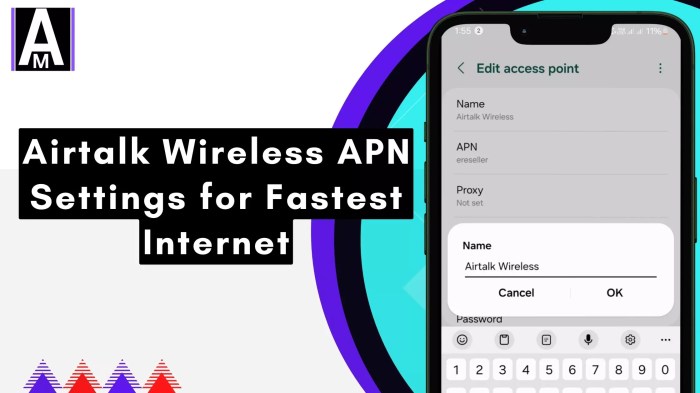
Navigating the digital landscape can sometimes feel like traversing a maze, especially when encountering technical hiccups. AirTalk Wireless understands this and provides a comprehensive suite of support channels to assist you with any APN-related issues you might face. From troubleshooting connection problems to optimizing your data settings, help is readily available.
Support Channels for APN-Related Issues
AirTalk Wireless offers several avenues for customers seeking assistance with APN configurations. These channels ensure you can find the help you need, whether you prefer self-service resources or direct interaction with support staff.
- Customer Service Hotline: For immediate assistance, dial the dedicated customer service number. Trained representatives are available to guide you through the APN setup process, troubleshoot connectivity problems, and answer your questions.
- Online Chat Support: Access real-time support through the AirTalk Wireless website. This convenient option allows you to chat with a support agent and receive instant answers to your queries.
- Email Support: Submit your questions or concerns via email. This channel is ideal for providing detailed information about your issue and receiving comprehensive solutions.
- Knowledge Base and FAQs: Explore the extensive online knowledge base and frequently asked questions (FAQs) section on the AirTalk Wireless website. This self-service resource provides answers to common APN-related issues, troubleshooting tips, and step-by-step guides.
- Social Media Channels: Stay updated on the latest news, announcements, and support tips by following AirTalk Wireless on social media platforms. You can also reach out to the support team through direct messages on these channels.
Accessing AirTalk Wireless Official Resources
To access official information and support resources, visit the following links:
- AirTalk Wireless Official Website: https://www.airtalkwireless.com/ This website serves as the primary hub for all information related to AirTalk Wireless services, including APN settings.
- AirTalk Wireless Support Page: While the direct link to a dedicated support page may vary, you can typically find it within the “Support” or “Contact Us” sections of the main website. This page provides access to FAQs, troubleshooting guides, and contact information for customer support.
Common Questions and Answers About APN Settings
Understanding APN settings can sometimes be confusing. The following table provides answers to common questions, clarifying the setup and troubleshooting process.
| Question | Answer | Additional Information | Troubleshooting Tips |
|---|---|---|---|
| What is an APN? | APN stands for Access Point Name. It is a gateway between your mobile network and the public internet. | The APN settings allow your device to connect to the internet, send and receive MMS messages, and access other data services. | Incorrect APN settings will prevent data connectivity. |
| How do I find my AirTalk Wireless APN settings? | You can usually find the correct APN settings on the AirTalk Wireless website or in the documentation provided with your SIM card. | The settings typically include the APN, username, password, MCC (Mobile Country Code), and MNC (Mobile Network Code). | If you can’t find the settings, contact AirTalk Wireless customer support. |
| How do I configure APN settings on my Android device? | Go to Settings > Mobile Networks > Access Point Names. Tap the “+” icon to add a new APN and enter the AirTalk Wireless settings. | The exact location of the APN settings may vary depending on your device manufacturer and Android version. | Ensure that the APN is enabled after you save it. Restart your phone after making changes. |
| What should I do if my data isn’t working after configuring the APN? | Double-check that the APN settings are entered correctly. Restart your device. Ensure that data roaming is enabled if you are outside your home network. | Incorrectly entered settings are a common cause of data connectivity problems. | If the problem persists, contact AirTalk Wireless customer support for assistance. You might have to reset to the default APN and start over. |
Alternative APN Configurations: Airtalk Wireless Apn Settings Android
Sometimes, the default APN settings provided by AirTalk Wireless might not deliver optimal performance. This is where exploring alternative APN configurations comes into play. AirTalk Wireless, like many providers, may occasionally suggest alternative settings, or experienced users might discover configurations that work better in specific situations. Understanding these alternatives, along with their potential advantages and disadvantages, is crucial for maximizing your mobile data experience.
Exploring Alternative APN Settings Recommended by AirTalk Wireless
AirTalk Wireless may occasionally recommend alternative APN configurations for various reasons. These recommendations could be based on network updates, troubleshooting specific issues, or optimizing performance in particular geographic areas. These alternative settings usually aim to address issues like slow data speeds, connectivity problems, or inconsistent service. AirTalk Wireless typically provides these settings through their customer support channels, on their website, or in troubleshooting guides.
Always verify the source and legitimacy of any alternative APN settings before applying them.
Comparing Pros and Cons of Alternative APN Settings
Switching to an alternative APN configuration can offer several benefits, but it’s important to weigh these against potential drawbacks. Here’s a breakdown:
- Potential Pros:
- Improved Data Speeds: Alternative settings can sometimes bypass network congestion or optimize data routing, leading to faster download and upload speeds.
- Enhanced Connectivity: In areas with weak signal strength, alternative configurations might improve the stability of your connection.
- Reduced Latency: Some APN settings may be configured to prioritize data packets, potentially reducing lag and improving responsiveness, especially during online gaming or video calls.
- Compatibility: Specific configurations may be optimized for particular devices or network technologies, such as 5G or VoLTE.
- Potential Cons:
- Compatibility Issues: An alternative APN might not be compatible with your device or the AirTalk Wireless network, leading to no data connectivity.
- Reduced Performance: Incorrectly configured APNs could result in slower speeds or unreliable connections.
- Security Risks: Using APNs from untrusted sources can expose your device to security vulnerabilities. Always obtain settings from reputable sources.
- Increased Data Usage: Some alternative settings may inadvertently consume more data.
Backing Up and Restoring APN Settings on Android
Before experimenting with alternative APN settings, it’s essential to back up your existing configuration. This allows you to revert to your original settings if the alternative ones don’t work as expected. Android provides several methods for backing up and restoring APN settings.
- Backing Up APN Settings:
- Manual Recording: The simplest method is to manually write down all your current APN settings. This includes the APN name, APN, MMSC, MCC, MNC, authentication type, APN type, and other relevant details. Keep this information in a safe place.
- Using Third-Party Apps: Several apps available on the Google Play Store are designed to back up and restore APN settings. These apps typically allow you to save your current settings as a file, which can be restored later. Research and choose reputable apps, as they will require permissions to access your network settings.
- Screenshotting: Take screenshots of each APN setting screen. This offers a visual record of your configuration, useful for quick reference.
- Restoring APN Settings:
- Manual Input: Use the information you previously recorded to manually re-enter your APN settings. This is straightforward but can be time-consuming.
- Using Third-Party Apps: Restore your backed-up APN settings using the same app you used for the backup. The app will typically overwrite your current settings with the saved configuration.
- Factory Reset (as a last resort): If all else fails, you can perform a factory reset of your device. This will revert your device to its original settings, including the default APN configuration. Note that this will erase all your data, so back up your important files before proceeding.
