Android emulator system ui isnt responding – Ever discovered your self gazing a frozen Android emulator, the System UI stubbornly refusing to cooperate? It is a irritating expertise, like ready for a slow-motion dawn. This occurs extra usually than you suppose. This information is your compass, able to navigate the generally treacherous waters of Android emulator woes. We’ll decode the which means of “System UI is not responding,” unravel its widespread signs, and demystify the internal workings of this important element.
Think about the Android emulator as a digital playground, and the System UI is the sport grasp. When it freezes, the playground goes silent. We’ll discover the standard suspects behind this digital standstill: useful resource hogs like CPU and RAM, outdated variations, and sneaky software program conflicts. Get able to embark on a journey of exploration, studying easy methods to revive your emulator and get again to creating, testing, or just having fun with the Android expertise.
Understanding the “Android Emulator System UI Is not Responding” Error
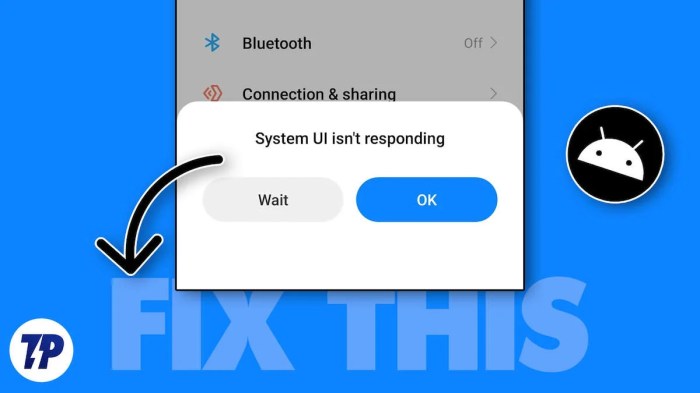
Ever discovered your self gazing a frozen Android emulator, desperately clicking and tapping, solely to be met with the dreaded “System UI is not responding” message? It is a widespread, but irritating, expertise for anybody working with Android emulators. Let’s delve into what this error really means, what it seems to be like in motion, and the essential function the System UI performs.
The Which means of “System UI Is not Responding”
Within the digital realm of Android emulation, the “System UI is not responding” error is basically a well mannered manner of claiming the emulator’s core interface is having an entire meltdown. Consider it like your automotive’s dashboard immediately freezing – you possibly can’t see your velocity, gas stage, or some other vital data. Within the emulator, this interprets to the working system’s visible interface – the icons, the navigation buttons, the standing bar, and every little thing else you see and work together with – changing into unresponsive.
The system is basically struggling to course of and show the graphical parts that make the emulator usable. This will occur as a result of numerous causes, which we’ll discover later, however the core problem is a failure of the System UI to maintain up with the calls for positioned upon it.
Widespread Signs of the Error
When the “System UI is not responding” error strikes, it manifests in quite a lot of annoying methods. Essentially the most fast signal is the frozen display. However the issues run deeper than only a visible freeze.
- Full Freeze: The emulator’s show turns into fully static. No buttons reply, and the display is locked on no matter was final displayed. You would possibly nonetheless see the mouse cursor shifting, however it will not work together with something on the display.
- Delayed Responses: Typically, the emulator would not freeze completely, however every little thing turns into extremely sluggish. Faucets and clicks take an eternity to register, and animations stutter or lag severely. This will make the emulator virtually unusable.
- Error Messages: The obvious symptom is, in fact, the “System UI is not responding” dialog field itself. That is usually accompanied by choices to “Wait” (which often would not work) or “Shut App” (which regularly restarts the emulator).
- Partial Performance: In some instances, components of the UI would possibly nonetheless work, whereas others are fully damaged. For instance, you would possibly be capable to pull down the notification shade however not work together with any of the notifications.
- Crashes and Restarts: The error can result in all the emulator crashing or restarting unexpectedly, resulting in misplaced work or progress.
The Operate of the Android Emulator’s System UI
The System UI is the visible coronary heart and soul of the Android expertise throughout the emulator. It is chargeable for managing and displaying every little thing you see on the display.
Right here’s a breakdown of its key capabilities:
- Displaying the Person Interface: The System UI renders the graphical parts of the Android interface, together with the standing bar (displaying time, battery, and notifications), the navigation bar (again, dwelling, and up to date apps buttons), app icons, and widgets.
- Dealing with Person Enter: It intercepts and processes person interactions like faucets, swipes, and button presses, translating them into actions throughout the working system.
- Managing System Notifications: The System UI is chargeable for displaying notifications, alerts, and different system messages to the person.
- Controlling System Animations: It handles animations and transitions, akin to opening and shutting apps, switching between screens, and displaying visible suggestions.
- Offering Accessibility Options: The System UI integrates with accessibility options like TalkBack, permitting customers with disabilities to work together with the emulator.
The System UI is a fancy element, and any points inside it may result in the “System UI is not responding” error. Understanding its perform is vital to troubleshooting and resolving the issue.
Potential Causes of the System UI Freeze
Coping with the “System UI is not responding” error in your Android emulator could be a irritating expertise, akin to making an attempt to herd cats whereas juggling flaming torches. However understanding the underlying causes is step one in direction of taming this digital beast. Let’s delve into the standard suspects that is likely to be behind this pesky freeze, reworking frustration into knowledgeable motion.
Useful resource Allocation and System UI Freezes
Useful resource allocation is the lifeblood of any working system, together with the Android emulator. Inadequate sources, like a ravenous artist making an attempt to color with a single crayon, can cripple the System UI.The allocation of CPU and RAM immediately impacts the emulator’s efficiency.
- CPU Bottlenecks: Think about your CPU because the mind of your laptop. The emulator, demanding important processing energy, would possibly overwhelm the CPU if it is lower than the duty. When the CPU turns into a bottleneck, the System UI suffers, resulting in freezes and unresponsiveness. As an illustration, if you’re operating a number of emulators or resource-intensive purposes concurrently, the CPU is pressured to prioritize duties, probably ravenous the emulator of the sources it wants.
- RAM Constraints: Consider RAM because the workbench the place the CPU lays out its work. If the workbench (RAM) is just too small, the CPU has to continually swap information between the workbench and the storage room (exhausting drive), slowing every little thing down. The emulator, needing a considerable quantity of RAM to perform, can develop into sluggish and freeze if RAM is inadequate. Take into account a state of affairs the place you are operating a high-resolution emulator picture on a machine with restricted RAM; the emulator will battle to allocate the mandatory reminiscence, resulting in System UI freezes.
Outdated Emulator Variations and System Photographs
Staying present with updates is essential, like maintaining your automotive’s engine tuned. Outdated elements can create all kinds of efficiency points, and the emulator isn’t any exception.The emulator’s software program and the system photographs it runs on can each contribute to System UI freezes if they don’t seem to be updated.
- Emulator Model: Consider the emulator model as the inspiration of a constructing. Older variations could comprise bugs and inefficiencies that result in instability, together with System UI freezes. These bugs are sometimes mounted in newer releases, so updating is vital. Take into account the Android emulator’s early days, the place sure variations had been infamous for efficiency points; updating to a later model usually resolved these issues.
- System Picture: The system picture is the blueprint for the Android OS that the emulator runs. Outdated system photographs will not be optimized for the emulator or could comprise compatibility points that set off System UI freezes. instance could be an emulator operating an older Android model, like KitKat, on a contemporary host machine; you would possibly expertise extra frequent freezes in comparison with operating a more moderen Android model on the identical machine.
Conflicting Software program and Background Processes, Android emulator system ui isnt responding
The digital world could be a crowded place, with numerous applications vying for consideration and sources. When software program conflicts or background processes run amok, the System UI in your emulator can develop into a casualty.Figuring out and managing these conflicts is significant to forestall the “System UI is not responding” error.
- Software program Conflicts: Think about two cooks making an attempt to make use of the identical oven concurrently; issues are sure to get messy. Conflicting software program, like different emulators, resource-intensive purposes, and even antivirus applications, can hog sources and intervene with the emulator’s operations, resulting in System UI freezes. A typical instance is operating the Android emulator alongside one other digital machine; the competitors for CPU and RAM can simply set off freezes.
- Background Processes: Background processes are like unseen staff toiling away behind the scenes. A few of these processes can devour important sources, probably ravenous the emulator of what it wants. A lot of background processes, particularly these which might be resource-intensive, can contribute to System UI freezes. Take into account a scenario the place you’ve gotten a number of applications, like cloud storage sync purchasers or computerized backup instruments, operating within the background whereas the emulator is lively; these can drain sources and result in the error.
Troubleshooting Steps

Coping with the “Android Emulator System UI Is not Responding” error might be irritating, however do not fret! We’ll stroll by some preliminary checks to get your emulator again on monitor. These steps are designed to be easy and canopy the most typical culprits behind the System UI freeze. Consider it as a fast diagnostic session earlier than we dive deeper into extra complicated options.
Preliminary Checks Guidelines
Earlier than you begin tearing your hair out, let’s undergo a fast guidelines. This can enable you to systematically establish the difficulty and prevent a while. It is like checking the fuses earlier than calling an electrician.
- Restart the Emulator: A easy restart can usually resolve momentary glitches.
- Restart the Host Machine: Typically, the issue lies together with your laptop, not the emulator itself.
- Examine Emulator Logs: These logs maintain invaluable clues about what is going on unsuitable.
- Confirm Useful resource Utilization: Guarantee your host machine is not overloaded.
- Replace Android Studio and SDK Instruments: Outdated software program could cause compatibility points.
Restarting the Emulator and Host Machine
The “flip it on and off once more” strategy is surprisingly efficient. Each the emulator and your host machine can get right into a funk, and a restart can usually clear the cobwebs.
Restarting the Emulator:
That is often the very first thing to attempt. Shut the emulator window. In Android Studio, you possibly can both click on the “Cease” button within the operating gadgets panel or choose “File” -> “Shut” after which choose “Shut Down Emulator.” After just a few moments, restart the emulator by clicking the “Run” button or by launching it once more from the AVD Supervisor.
Restarting the Host Machine:
A bunch machine restart is extra drastic, however generally needed. This clears out momentary recordsdata and processes that is likely to be interfering with the emulator. Save your work, shut all purposes, and restart your laptop. After the reboot, attempt operating the emulator once more.
Checking Emulator Logs for Error Messages and Warnings
Emulator logs are your secret weapon. They comprise an in depth report of every little thing occurring throughout the emulator, together with error messages and warnings that may pinpoint the supply of the issue.
Accessing the Logs:
The situation of the logs is determined by the emulator and your Android Studio setup, however they’re sometimes discovered within the “Logcat” window inside Android Studio. To entry Logcat, go to “View” -> “Device Home windows” -> “Logcat.” You may also discover logs within the emulator’s listing inside your mission folder or within the emulator’s set up listing. The precise path can fluctuate relying in your working system and Android Studio model.
Deciphering the Logs:
Logcat shows a stream of messages. Search for messages marked with “ERROR,” “WARN,” or “FATAL.” These are the most definitely indicators of issues. Look at the messages carefully, noting the time, the method ID (PID), and the precise error description. Typically, the error message will immediately point out the trigger, akin to a lacking library or a battle with one other utility. Different instances, chances are you’ll have to analysis the error code or message on-line to discover a resolution.
Widespread error messages to look at for embody: “System UI is not responding,” “ANR” (Utility Not Responding), and errors associated to graphics rendering or community connectivity.
Verifying the Emulator’s Useful resource Utilization within the Host Working System
The emulator is a useful resource hog. It consumes CPU, RAM, and disk area. In case your host machine is struggling, the emulator is more likely to undergo. Monitoring useful resource utilization helps decide in case your laptop is the bottleneck.
Monitoring Useful resource Utilization:
Use your working system’s built-in instruments to watch useful resource utilization. On Home windows, use the Process Supervisor (Ctrl+Shift+Esc). On macOS, use Exercise Monitor (present in Purposes/Utilities). On Linux, use instruments like `high`, `htop`, or `gnome-system-monitor`. Keep watch over CPU utilization, reminiscence utilization, and disk I/O.
If the CPU is consistently at 100%, or the reminiscence utilization is maxed out, it is a signal that your host machine is overloaded.
Figuring out the Wrongdoer:
Search for the “emulator” course of within the useful resource monitor. If the emulator is consuming a big quantity of sources, this may very well be the supply of the issue. Additionally, examine different purposes that is likely to be consuming sources, akin to Chrome, different IDEs, or resource-intensive video games. Shut pointless purposes to unlock sources for the emulator. Take into account growing the quantity of RAM allotted to the emulator within the AVD configuration settings.
In case your host machine has restricted RAM, you would possibly want to shut different purposes to unlock reminiscence.
Troubleshooting Steps
Coping with an unresponsive Android Emulator System UI might be irritating, however fortunately, there are superior troubleshooting strategies you possibly can make use of to deliver your emulator again to life. These methods delve deeper than the preliminary fixes, focusing on the core of the issue and offering extra strong options. Let’s discover these superior methods to overcome the System UI freeze.
Modifying Emulator Settings for Enhanced Efficiency and Stability
High-quality-tuning the emulator’s settings is like giving it a performance-enhancing tune-up. By adjusting numerous parameters, you possibly can considerably enhance each efficiency and stability. These modifications usually require a little bit of experimentation to search out the optimum configuration on your particular {hardware} and wishes.
- Accessing Emulator Settings: Open the Android Digital Machine (AVD) Supervisor, sometimes discovered inside Android Studio. Choose your emulator and click on the “Edit” button (pencil icon).
- Adjusting RAM Allocation: Enhance the RAM allocation for the emulator. The really helpful RAM allocation is determined by your host machine’s RAM; nevertheless, allocating an excessive amount of RAM can result in efficiency degradation on the host machine. start line is commonly 2GB or 4GB, however monitor your system’s useful resource utilization.
- Selecting Graphics Emulation Mode: Choose the suitable graphics emulation mode. The choices are sometimes “Automated,” “{Hardware} – GLES 2.0,” and “Software program – GLES 2.0.” “{Hardware}” is mostly the quickest in case your graphics card helps it, whereas “Software program” is slower however extra appropriate. “Automated” makes an attempt to pick out the most suitable choice. Should you expertise crashes, attempt switching between these modes.
- Enabling or Disabling “Use Host GPU”: This setting determines whether or not the emulator makes use of your host machine’s GPU for rendering. Enabling it may dramatically enhance efficiency, particularly for graphically intensive purposes. Nonetheless, it may additionally trigger points on some programs. Experiment to see which setting works greatest for you.
- Optimizing CPU Core Allocation: Allocate the right variety of CPU cores to the emulator. Extra cores can enhance efficiency, however over-allocation also can negatively affect your host machine. Usually, assigning half the cores accessible in your host machine is an affordable start line.
- Adjusting Inner Storage: Take into account growing the inner storage measurement. Should you incessantly set up massive purposes or retailer quite a lot of information throughout the emulator, growing the storage can forestall storage-related efficiency points.
Updating the Emulator and System Picture: A Step-by-Step Information
Conserving your emulator and system picture up-to-date is essential for stability, safety, and entry to the most recent Android options. Updates usually embody bug fixes and efficiency enhancements that immediately tackle points like System UI freezes. This is a transparent information on easy methods to replace each elements.
- Updating the Emulator:
- Examine for Updates: Open Android Studio and navigate to “SDK Supervisor.”
- Find the “SDK Instruments” tab: Examine for updates associated to “Android Emulator.”
- Set up Updates: If updates can be found, choose the checkbox subsequent to “Android Emulator” and click on “Apply.” Android Studio will obtain and set up the updates.
- Restart Android Studio: After the set up, restart Android Studio to make sure the updates are totally utilized.
- Updating the System Picture:
- Open the AVD Supervisor: In Android Studio, open the AVD Supervisor.
- Examine for System Picture Updates: The AVD Supervisor will present the system photographs put in on your digital gadgets. Search for any accessible updates.
- Obtain Updates: If an replace is on the market for a system picture, click on the “Obtain” button subsequent to the picture.
- Create or Replace AVDs: Should you create a brand new AVD, it’s going to robotically use the most recent system picture. For current AVDs, you would possibly have to replace them by deciding on the brand new system picture when enhancing the AVD configuration.
Clearing the Emulator’s Cache and Knowledge
Like a pc, the emulator shops momentary recordsdata (cache) and utility information. Over time, these can develop into corrupted or devour extreme sources, resulting in System UI issues. Clearing the cache and information can usually resolve these points and restore easy operation.
- Clearing App Cache: Inside the emulator, go to “Settings” > “Apps.” Choose the app inflicting points or all apps in case you suspect a normal drawback. Select “Storage” after which “Clear Cache.”
- Clearing App Knowledge: In the identical “Storage” settings, you can even “Clear Knowledge.” This can take away all information related to the app, successfully resetting it to its preliminary state. Be cautious, as this may delete any saved settings, logins, or different person information.
- Clearing the Emulator’s Cache (Superior): If clearing app caches would not work, you possibly can attempt clearing all the emulator cache. That is sometimes finished by deleting the emulator’s information recordsdata. The precise location of those recordsdata is determined by your working system and Android Studio configuration. Seek the advice of on-line sources for the precise file paths.
Troubleshooting Particular Points Associated to Graphics Drivers
Graphics drivers play a vital function within the emulator’s efficiency. Outdated, corrupted, or incompatible drivers can result in System UI freezes, graphical glitches, and general instability. This part supplies insights into addressing graphics-related issues.
- Updating Graphics Drivers: Guarantee your graphics drivers are up-to-date. Go to your graphics card producer’s web site (NVIDIA, AMD, or Intel) and obtain the most recent drivers on your particular card and working system.
- Driver Compatibility: Typically, the most recent drivers could cause points. Should you expertise issues after updating, attempt rolling again to a earlier driver model.
- Graphics Emulation Settings: Experiment with the graphics emulation settings within the AVD configuration ({Hardware}, Software program, or Automated) to search out the most effective configuration on your system.
- Checking for Driver Conflicts: Guarantee no different software program or drivers are interfering together with your graphics card. This will contain briefly disabling or uninstalling different graphics-related purposes.
Widespread Emulator Settings and Their Affect on Efficiency
Understanding how completely different emulator settings have an effect on efficiency is important for optimizing your expertise. The next desk supplies a fast reference information.
| Setting | Description | Affect on Efficiency | Really helpful Worth |
|---|---|---|---|
| RAM | The quantity of RAM allotted to the emulator. | Larger RAM usually improves efficiency, particularly for memory-intensive purposes. Nonetheless, allocating an excessive amount of RAM can negatively have an effect on the host machine. | 2GB – 4GB (Regulate primarily based on host machine RAM) |
| Graphics Emulation | Specifies how the emulator renders graphics. | {Hardware} acceleration is mostly quicker, whereas software program rendering is extra appropriate. | Experiment with “{Hardware} – GLES 2.0” and “Software program – GLES 2.0” to search out the most suitable choice. “Automated” can be utilized as a place to begin. |
| Use Host GPU | Permits the usage of the host machine’s GPU for rendering. | Considerably improves efficiency in case your GPU is appropriate. | Enabled (until experiencing points) |
| CPU Cores | The variety of CPU cores allotted to the emulator. | Extra cores can enhance efficiency, however over-allocation can affect the host machine. | Half the variety of cores accessible on the host machine. |
| Inner Storage | The quantity of inner cupboard space allotted to the emulator. | Inadequate storage can result in efficiency points and storage-related errors. | Enhance in case you incessantly set up massive apps or retailer quite a lot of information. |
Coping with Useful resource Constraints: Android Emulator System Ui Isnt Responding
Working an Android emulator might be like internet hosting a celebration – in case you do not handle the visitor listing (CPU and RAM) correctly, issues can shortly get out of hand, resulting in a sluggish expertise and, in our case, the dreaded “System UI is not responding” error. Environment friendly useful resource administration is essential for a easy and satisfying growth expertise. Let’s delve into how we are able to preserve the social gathering (emulator) operating easily.
Managing CPU and RAM Allocation for the Android Emulator
The Android emulator, very similar to a hungry houseguest, wants a certain quantity of sources to perform correctly. Allocating the correct quantity of CPU and RAM is step one towards stopping the System UI from freezing.To configure these settings, you may sometimes entry the emulator’s settings by the Android Digital Machine (AVD) Supervisor inside Android Studio. This is a breakdown:
- RAM Allocation: The AVD Supervisor means that you can specify the quantity of RAM the emulator can use. start line is often 2GB to 4GB, however this is determined by your host machine’s RAM. You probably have 16GB of RAM or extra in your host, allocating 4GB to the emulator is commonly a protected guess.
- CPU Cores: You may as well management the variety of CPU cores the emulator makes use of. The default is commonly one core, however you possibly can improve this primarily based in your CPU’s capabilities. Utilizing extra cores can enhance efficiency, however it additionally consumes extra sources.
- Graphics Settings: The emulator’s graphics settings additionally play a task. Think about using “{Hardware} – GLES 2.0” or “{Hardware} – GLES 3.0” for higher efficiency in case your host machine’s graphics card helps it. Software program rendering could be a fallback, however it’s usually slower.
Keep in mind that over-allocating sources can starve your host machine, resulting in general system slowdown. Discovering the suitable steadiness is vital.
Strategies to Scale back the Emulator’s Useful resource Consumption
Even with optimum allocation, the emulator can nonetheless be a useful resource hog. Listed below are some methods to lighten its load:
- Emulator Pores and skin: Utilizing a smaller emulator pores and skin (e.g., a smaller display measurement) can scale back the quantity of graphics processing required.
- Emulator Snapshot: Reap the benefits of emulator snapshots. Snapshots save the emulator’s state, permitting you to shortly resume from a earlier level. This may be quicker than a full boot every time.
- Shut Pointless Apps: Contained in the emulator, shut any background apps you are not actively utilizing. This frees up RAM and CPU cycles.
- Use a System Picture Optimized for Velocity: Some system photographs are designed for efficiency. Think about using a system picture like “Google APIs Intel Atom (x86)” for higher velocity, particularly on Intel-based machines.
- Allow Fast Boot: Fast Boot is a function that permits the emulator to begin a lot quicker. It is usually enabled by default, however it’s price checking your AVD settings.
- Disable Animations: Inside the emulator’s settings (Developer choices), you possibly can disable animations. This will barely enhance efficiency.
These tweaks could make a noticeable distinction within the emulator’s responsiveness.
Steering on Optimizing the Host Machine’s Efficiency
The host machine’s efficiency immediately impacts the emulator’s velocity. This is how to make sure your host is as much as the duty:
- Ample RAM: Ensure that your host machine has sufficient RAM. 16GB or extra is very really helpful for operating the emulator effectively, particularly in case you plan to run different purposes concurrently.
- Quick Storage: Use an SSD (Stable State Drive) on your working system and Android Studio. SSDs present considerably quicker learn/write speeds than conventional HDDs, which quickens emulator boot instances and general efficiency.
- Replace Drivers: Hold your graphics card drivers and different system drivers updated. Outdated drivers can result in efficiency bottlenecks.
- Shut Pointless Purposes: Shut any resource-intensive purposes operating in your host machine whereas utilizing the emulator. This contains internet browsers with many tabs open, video enhancing software program, and different demanding applications.
- Monitor Useful resource Utilization: Use your working system’s built-in instruments (Process Supervisor on Home windows, Exercise Monitor on macOS) to watch CPU, RAM, and disk utilization. This may help you establish any bottlenecks.
- Allow Virtualization: Be certain that virtualization is enabled in your BIOS/UEFI settings. This enables the emulator to make use of hardware-assisted virtualization, which dramatically improves efficiency.
By optimizing your host machine, you present the emulator with the sources it must perform easily.
State of affairs: Over-Allotted Emulator and System UI Points
Think about a developer with a laptop computer that includes 8GB of RAM. They allocate 6GB of RAM to the Android emulator and allocate 4 CPU cores, leaving little or no for the host working system and different purposes. This developer, engaged on a fancy app with a number of background processes, incessantly experiences the “System UI is not responding” error. The host machine turns into sluggish, and even primary duties like opening an internet browser take a very long time.
The emulator, starved of sources, struggles to maintain up, resulting in freezes and crashes. This state of affairs illustrates how over-allocating sources to the emulator can cripple each the emulator and the host machine, leading to a irritating growth expertise. The answer is to re-evaluate the useful resource allocation, scale back the emulator’s calls for, and optimize the host machine’s efficiency. As an illustration, decreasing the emulator’s RAM allocation to 3GB, closing pointless purposes on the host, and utilizing a quicker storage drive would drastically enhance the scenario.
Graphics Driver Points and Options
Let’s discuss in regards to the unsung heroes of your Android emulator expertise: graphics drivers. They’re the silent powerhouses that translate the complicated directions of the emulator into the visible feast you see in your display. When these drivers aren’t as much as snuff, the “System UI is not responding” error can rear its ugly head, turning your growth course of right into a irritating slog.
Understanding the connection between your graphics drivers and the emulator is vital to a smoother, extra satisfying expertise.
The Function of Graphics Drivers in Emulator Efficiency
Graphics drivers act because the middleman between your working system and your graphics card (GPU). They’re essential for translating the emulator’s directions into visible output. Consider them because the translators of the digital world, changing code into the pictures, animations, and interactive parts you see throughout the Android emulator. With out a well-functioning graphics driver, the emulator struggles to render graphics effectively, resulting in efficiency bottlenecks, freezes, and the dreaded “System UI is not responding” error.
They deal with the rendering of the person interface, the show of the Android OS, and the general responsiveness of the emulator. Primarily, they decide how shortly and easily the emulator runs.
Updating Graphics Drivers for Totally different Working Programs
Conserving your graphics drivers up-to-date is a elementary step in making certain optimum emulator efficiency. The method varies relying in your working system and the kind of graphics card you’ve gotten. This is a breakdown for the most typical situations:For Home windows:
- Establish Your Graphics Card: Decide your graphics card mannequin (e.g., NVIDIA GeForce RTX 3070, AMD Radeon RX 6800 XT, or Intel Iris Xe Graphics). You may often discover this data within the Machine Supervisor (seek for “Machine Supervisor” within the Home windows search bar). Beneath “Show adapters,” you may see your graphics card listed.
- Replace By way of Machine Supervisor: Proper-click in your graphics card in Machine Supervisor and choose “Replace driver.” Select “Search robotically for drivers.” Home windows will try to search out and set up the most recent drivers.
- Producer’s Web site: Go to the web site of your graphics card producer (NVIDIA, AMD, or Intel). Obtain the most recent drivers particularly on your card mannequin and working system. Set up the downloaded driver package deal, following the on-screen directions. That is usually essentially the most dependable technique for getting the most recent drivers.
- NVIDIA GeForce Expertise/AMD Adrenalin Software program: You probably have an NVIDIA or AMD graphics card, you need to use the producer’s software program (GeForce Expertise for NVIDIA or Adrenalin for AMD) to robotically examine for and set up driver updates. This can be a handy technique to preserve your drivers present.
For macOS:
- macOS Updates: Apple sometimes bundles graphics driver updates with macOS system updates. Guarantee your macOS is up-to-date by going to System Preferences > Software program Replace. Set up any accessible updates.
- Examine for Supplemental Updates: Typically, Apple releases supplemental updates that embody particular driver updates. Examine for these after putting in a significant macOS replace.
For Linux:
- Distribution-Particular Strategies: The tactic for updating graphics drivers on Linux varies relying in your distribution (e.g., Ubuntu, Fedora, Arch Linux).
- Ubuntu: Use the “Further Drivers” utility (seek for it within the purposes menu). This software helps you put in proprietary drivers on your graphics card. You may as well use the terminal: `sudo apt replace && sudo apt improve`.
- Fedora: Use the Software program utility to examine for updates. You may also want to put in the drivers by the terminal: `sudo dnf replace`.
- Arch Linux: Use the `pacman` package deal supervisor: `sudo pacman -Syu`. You may also want to put in particular driver packages.
- Producer’s Drivers (Superior): For extra superior customers, you possibly can set up drivers immediately from the producer (NVIDIA or AMD). This often entails downloading the driving force package deal and following the set up directions. Be cautious, as this may be extra complicated and should require some command-line information.
Troubleshooting Steps for Graphics-Associated Errors
Even with up to date drivers, you would possibly encounter graphics-related errors. This is easy methods to troubleshoot them:
- Restart Your Pc: A easy restart can usually resolve momentary glitches or conflicts.
- Reinstall Graphics Drivers: If updating would not work, attempt fully uninstalling your graphics drivers after which reinstalling the most recent model. Use a driver uninstaller software (like Show Driver Uninstaller – DDU) to make sure a clear removing.
- Examine for Overheating: Overheating could cause efficiency points and instability. Monitor your GPU temperature whereas operating the emulator. If it is persistently excessive, enhance cooling (e.g., by cleansing your laptop’s followers or including extra cooling options).
- Confirm Emulator Settings: Double-check your emulator settings. Be certain that {hardware} acceleration (e.g., “Use Host GPU”) is enabled. Incorrect settings can considerably affect efficiency.
- Check Totally different Emulator Variations: Attempt utilizing a distinct model of the Android emulator. Typically, a particular model could fit points together with your graphics drivers.
- Examine for Conflicting Software program: Some software program, akin to display recording instruments or different resource-intensive purposes, can intervene with the emulator’s efficiency. Shut any pointless purposes earlier than operating the emulator.
- Search for Error Messages: Look at any error messages generated by the emulator or your working system. These messages usually present clues in regards to the underlying drawback.
Evaluating and Contrasting Totally different Rendering Choices Accessible within the Emulator Settings
The Android emulator gives numerous rendering choices that affect how graphics are processed. Understanding these choices may help you optimize efficiency and troubleshoot points. Right here’s a breakdown:
- Automated: The emulator robotically selects the most effective rendering choice primarily based in your system configuration. That is usually a superb start line.
- {Hardware} (GPU) Rendering: This selection makes use of your graphics card (GPU) to speed up rendering. It usually supplies the most effective efficiency, however it requires appropriate drivers and should generally trigger points on sure programs. This setting is commonly enabled by default.
- Software program (CPU) Rendering: This selection makes use of your CPU to render graphics. It is much less demanding in your GPU however sometimes leads to slower efficiency. It is helpful in case you have driver issues or in case your GPU is not highly effective sufficient.
- OpenGL ES 2.0/3.0: These settings specify the model of OpenGL (a cross-platform graphics API) utilized by the emulator. OpenGL ES 3.0 gives improved efficiency and options in comparison with 2.0, however it requires a graphics card that helps it.
Choosing the proper rendering choice is essential. Should you expertise efficiency points, attempt switching between {Hardware} and Software program rendering to see which supplies higher outcomes. Experiment with the OpenGL ES variations to search out the optimum setting on your {hardware} and the precise Android model you might be emulating. Take into account a real-world instance: A developer, experiencing sluggish emulator efficiency, switched from {Hardware} rendering (utilizing an outdated driver) to Software program rendering.
Whereas the efficiency was initially slower, the emulator grew to become extra secure, permitting them to proceed growth with out fixed crashes. This highlights the significance of selecting the rendering choice that most accurately fits your system and the mission necessities.
System Picture and Emulator Model Compatibility
Compatibility between your Android emulator and the system picture you are operating is totally essential. Consider it like a wonderfully matched dance partnership; if one associate is out of sync, the entire efficiency suffers, and on this case, that struggling manifests as a System UI crash or different irritating emulator hiccups. Guaranteeing these two elements are enjoying properly collectively can usually be the silver bullet that resolves the “System UI is not responding” error.
Figuring out Emulator and System Picture Variations
Realizing the precise variations of your emulator and system picture is step one towards compatibility bliss. Luckily, Android Studio makes this data available.To seek out the emulator model:Go to Android Studio -> Instruments -> AVD Supervisor. Find the emulator you are utilizing. You may often discover the emulator model listed within the ‘Particulars’ part, alongside the Android model and different specs.To seek out the system picture model:The system picture model is tied to the Android model of the digital machine (e.g., Android 13, Android 14).
This data can be readily seen within the AVD Supervisor, displayed alongside the emulator’s title and {hardware} profile. For extra granular particulars, increase the emulator’s entry within the AVD Supervisor. It ought to reveal the precise system picture construct and API stage.
Downloading and Putting in Totally different System Photographs
Android Studio supplies a handy mechanism for downloading and managing numerous system photographs. That is important for testing your app throughout completely different Android variations and architectures, and generally, for resolving compatibility points.Right here’s easy methods to obtain and set up a distinct system picture:
1. Open the AVD Supervisor
As talked about earlier, navigate to Instruments -> AVD Supervisor in Android Studio.
2. Choose a Digital Machine
Select the digital machine you want to modify.
3. Click on the Edit (pencil) Icon
This opens the configuration settings for the chosen digital machine.
4. Choose the System Picture
Within the ‘System Picture’ part, you possibly can choose a distinct system picture from the dropdown menu. If the specified picture is not accessible, click on the ‘Obtain’ button subsequent to the Android model.
5. Obtain the Picture
This opens the ‘System Picture’ dialog, the place you possibly can choose and obtain numerous system photographs. Take note of the structure (e.g., x86, x86_64, arm64-v8a) and the Android model.
6. Apply the Adjustments
After downloading, choose the brand new system picture and apply the adjustments. It’s possible you’ll have to restart the emulator for the adjustments to take impact.Bear in mind to contemplate the structure of the system picture; mismatching this may result in efficiency issues and even forestall the emulator from beginning. For instance, in case you’re utilizing an x86 emulator, make sure the system picture can be x86.
Potential Compatibility Points
A number of points can come up when the emulator and system picture variations aren’t aligned correctly. This is a breakdown of some widespread issues:
- System UI Crashes: Essentially the most frequent symptom, the System UI freezing or crashing, usually stems from incompatibility between the emulator’s core elements and the system picture’s working system. This manifests because the acquainted “System UI is not responding” error.
- Utility Compatibility Points: Purposes would possibly behave erratically, crashing, displaying incorrectly, or failing to launch in any respect.
- Efficiency Degradation: The emulator might develop into sluggish, expertise frequent lag, or devour extreme sources, making growth and testing sluggish and irritating.
- Emulator Startup Failures: In some instances, the emulator would possibly fail to begin altogether, getting caught in a boot loop or displaying error messages associated to system picture initialization.
- Lacking Options: Sure options of the system picture may not perform accurately or is likely to be completely unavailable, hindering correct testing of utility performance.
- Safety Vulnerabilities: Utilizing outdated system photographs might expose the emulator (and probably the host machine) to safety vulnerabilities. All the time replace your system photographs frequently to patch any potential safety flaws.
- SDK and Library Conflicts: Incompatible system photographs can conflict with the Android SDK or third-party libraries, resulting in construct errors, runtime exceptions, and unpredictable habits.
Emulator Settings for Optimum Efficiency
High-quality-tuning your Android emulator settings is akin to adjusting the engine of a race automotive; it is the important thing to unlocking peak efficiency and making certain a easy, responsive expertise. These settings immediately affect the emulator’s velocity, stability, and useful resource consumption. Understanding and configuring these choices appropriately is essential for every little thing from informal app testing to rigorous recreation growth.
Emulator Efficiency Settings
The Android emulator gives quite a lot of settings designed to optimize efficiency. These settings management how the emulator interacts together with your host machine’s {hardware} and software program.
- RAM Allocation: This setting determines the quantity of RAM the emulator can use. Extra RAM usually results in higher efficiency, particularly for demanding purposes and video games. Nonetheless, allocating an excessive amount of RAM can negatively affect your host machine’s efficiency.
- CPU Core Allocation: You may specify the variety of CPU cores the emulator makes use of. Using extra cores can enhance efficiency, notably for duties that may be parallelized.
- Graphics Settings: These settings management how the emulator renders graphics. Choices sometimes embody:
- {Hardware} Acceleration: This leverages your host machine’s GPU for rendering, considerably enhancing efficiency. That is often the really helpful setting.
- Software program Rendering: This makes use of the CPU for rendering, which is slower however might be helpful in case you’re experiencing compatibility points together with your GPU.
- Virtualization Engine: This setting permits or disables virtualization applied sciences like Intel HAXM or AMD’s equal. These applied sciences dramatically velocity up the emulator by using hardware-assisted virtualization.
- Storage Settings: These settings decide how the emulator’s storage is managed. Choices embody the dimensions of the inner storage and whether or not to make use of a shared folder with the host machine.
Adjusting Settings for Totally different Use Instances
The best emulator configuration varies relying in your meant use. This is easy methods to tailor settings for particular situations:
- Gaming: For gaming, prioritize efficiency.
- Allocate a beneficiant quantity of RAM (e.g., 4GB or extra).
- Assign a number of CPU cores (e.g., 4 or extra).
- Allow {Hardware} Acceleration.
- Select a high-performance graphics setting.
- Improvement: Improvement usually entails testing a variety of purposes and options.
- Allocate enough RAM primarily based on the goal machine’s necessities and your host machine’s sources.
- Stability CPU core allocation to optimize efficiency with out overtaxing your host machine.
- {Hardware} Acceleration is mostly really helpful for quicker construct and check cycles.
- Basic Use/App Testing: For normal use and primary app testing, you need to use extra modest settings.
- Allocate a reasonable quantity of RAM.
- Use a reasonable variety of CPU cores.
- {Hardware} Acceleration is often most popular.
Optimized Emulator Configurations (Examples)
Listed below are just a few examples of emulator configurations tailor-made to completely different {hardware} setups:
- Excessive-Finish Desktop (Gaming):
- RAM: 8GB
- CPU Cores: 6
- Graphics: {Hardware} Acceleration (with devoted GPU)
- Virtualization: Enabled (e.g., Intel HAXM)
- Mid-Vary Laptop computer (Improvement):
- RAM: 4GB
- CPU Cores: 4
- Graphics: {Hardware} Acceleration (with built-in or devoted GPU)
- Virtualization: Enabled
- Low-Finish Desktop (Primary App Testing):
- RAM: 2GB
- CPU Cores: 2
- Graphics: {Hardware} Acceleration (if supported, in any other case Software program Rendering)
- Virtualization: Enabled (if supported)
Greatest Practices for Emulator Setup* All the time Allow {Hardware} Acceleration: That is the one most impactful setting for efficiency.
Allocate Ample RAM
Make sure the emulator has sufficient RAM to run easily, however do not over-allocate, as it may affect your host machine.
Match CPU Core Allocation to Your Host Machine
Do not assign extra cores than your host machine has accessible.
Hold the Emulator Up to date
Frequently replace the emulator and its dependencies to profit from efficiency enhancements and bug fixes.
Take into account Utilizing a Totally different Emulator
Should you’re persistently going through efficiency points, discover different Android emulator choices (e.g., Genymotion, NoxPlayer) that will provide higher efficiency in your {hardware}.
Third-Get together Software program Conflicts
Typically, your Android emulator throws a digital tantrum not due to its personal shortcomings, however as a result of it is having a spat with different software program in your laptop. Consider it like a crowded social gathering the place everybody’s making an attempt to speak without delay – issues get messy shortly. Figuring out and resolving these conflicts is vital to a easy emulator expertise. Let’s dive into the potential troublemakers and easy methods to restore peace.
Figuring out Potential Conflicts with Different Software program
The Android emulator, a fancy piece of software program, depends on numerous system sources. Different purposes, notably those who additionally demand important sources or work together carefully with the working system, can intervene with its operation. This interference usually manifests because the “System UI is not responding” error, slowdowns, or outright crashes.
Examples of Software program Identified to Trigger Points with Android Emulators
A number of sorts of software program are infamous for inflicting conflicts. It is like a rogues’ gallery of digital villains, every with its personal particular model of chaos.
- Virtualization Software program: Applications like VMware, VirtualBox, and even different Android emulators (operating concurrently) can compete for virtualization sources, resulting in instability. Think about two cooks making an attempt to make use of the identical oven on the identical time; the outcomes are hardly ever scrumptious.
- Safety Software program: Antivirus applications and firewalls can generally block the emulator’s community entry or intervene with its processes. That is usually a matter of the safety software program mistaking the emulator for a risk.
- Graphics-Intensive Purposes: Video games, video enhancing software program, and different applications that closely make the most of the graphics processing unit (GPU) can pressure the host system, leaving fewer sources for the emulator. Consider it like a site visitors jam; too many automobiles, and every little thing slows down.
- Improvement Instruments: Different Built-in Improvement Environments (IDEs), debuggers, and monitoring instruments also can conflict with the emulator, particularly in the event that they attempt to entry the identical ports or system sources.
Diagnosing and Resolving Software program Conflicts
Pinpointing the perpetrator can really feel like detective work, however there are some methods that will help you resolve the thriller.
- Shut Pointless Purposes: Begin by closing any applications you do not want, particularly these listed above. This helps isolate the issue.
- Monitor Useful resource Utilization: Use the Process Supervisor (Home windows) or Exercise Monitor (macOS) to watch CPU, reminiscence, and disk utilization. Search for any purposes which might be consuming an extreme quantity of sources. If an utility is hogging all of the sources, it might be the reason for the issue.
- Check in Secure Mode: Restart your laptop in Secure Mode. This hundreds solely the important drivers and providers, which may help decide if a third-party utility is the supply of the difficulty. If the emulator runs easily in Secure Mode, a conflicting utility is at fault.
- Disable or Uninstall Suspicious Software program: Should you suspect a specific utility, attempt disabling it briefly or, if needed, uninstalling it. Check the emulator after every change to see if the issue is resolved.
- Replace Software program: Ensure that your Android emulator, graphics drivers, and any probably conflicting software program are updated. Updates usually embody bug fixes and compatibility enhancements.
Strategies to Isolate the Emulator from Potential Interference
Typically, you possibly can’t fully take away a conflicting utility. In such instances, there are methods to create a extra harmonious atmosphere on your emulator.
- Allocate Ample Sources: Make sure the emulator has sufficient CPU cores, RAM, and disk area allotted to it. This will usually be adjusted within the emulator’s settings.
- Regulate Emulator Settings: Experiment with the emulator’s settings, akin to graphics rendering mode (e.g., software program or {hardware}) and emulator pores and skin. Some settings could also be extra appropriate with particular software program configurations.
- Use a Devoted Person Profile: On Home windows, you possibly can create a separate person profile devoted to Android emulator utilization. This will isolate the emulator from different software program put in in your foremost profile.
- Digital Machine Configuration: Should you’re utilizing virtualization software program, you possibly can configure the digital machine particularly for the emulator, allocating sources and isolating it from the host working system.
- Take into account Alternate Emulators: If persistent conflicts plague your major emulator, take into account making an attempt a distinct Android emulator. Totally different emulators have various ranges of compatibility with third-party software program.
Utilizing the Emulator Command Line
Alright, let’s get right down to the nitty-gritty and discover the facility of the Android emulator command line. Consider it as the key weapon for builders and testers, providing granular management and troubleshooting capabilities that the graphical interface merely cannot match. Mastering the command line opens up a world of customization and problem-solving, turning you into an emulator guru. It is like having a backstage cross to the internal workings of your digital Android machine.
Launching and Configuring the Emulator
The command line is your portal to launching and configuring the Android emulator. You will be typing instructions, however don’t be concerned, it is not as intimidating because it sounds. We’ll break it down step-by-step.To launch the emulator, you may usually use the `emulator` command, adopted by numerous choices to customise its habits. The essential syntax is:“`emulator @ [options]“`The place:* “ is the title of your Android Digital Machine (AVD). You’ll find your AVD names utilizing the Android Digital Machine Supervisor (AVD Supervisor) in Android Studio.
`[options]` are a plethora of flags that can help you tweak every little thing from the display measurement to the community settings.
Let’s take a look at some elementary examples:* Launching with a particular AVD: “` emulator @Pixel_4_API_30 “` This command launches the emulator utilizing the AVD named “Pixel_4_API_30”.* Launching with a particular display measurement and density: “` emulator @Pixel_4_API_30 -screen width=1080 -screen top=2280 -density 440 “` This overrides the default display settings of the “Pixel_4_API_30” AVD, setting the width, top, and density.
That is helpful for testing your app on completely different display configurations.* Launching with a particular RAM measurement: “` emulator @Pixel_4_API_30 -memory 4096 “` This command allocates 4096MB (4GB) of RAM to the emulator. Be conscious of your host machine’s RAM; allocating an excessive amount of can sluggish issues down. Understanding these preliminary instructions units the stage for extra complicated configurations.
The emulator command line offers you final management over the digital machine.
Helpful Command-Line Choices for Troubleshooting
Troubleshooting with the emulator command line is the place the actual magic occurs. It means that you can diagnose issues and acquire insights into the emulator’s habits. Let’s delve into some important choices:* `-verbose`: That is your greatest buddy when issues go unsuitable. Including `-verbose` to your launch command will present detailed output in regards to the emulator’s startup course of, together with any errors or warnings.
“` emulator @Pixel_4_API_30 -verbose “` That is particularly useful for pinpointing the supply of crashes or initialization failures.* `-show-kernel`: This selection shows the kernel messages in the course of the emulator’s boot course of. That is invaluable for debugging low-level points. “` emulator @Pixel_4_API_30 -show-kernel “`* `-wipe-data`: In case your emulator is performing up, a knowledge wipe is likely to be the answer.
This selection resets the emulator to its manufacturing facility state, clearing all put in apps and person information. “` emulator @Pixel_4_API_30 -wipe-data “` Use this with warning, as it’s going to erase every little thing on the digital machine.* `-logcat :`: This selection means that you can filter the emulator’s logcat output, making it simpler to search out particular errors or data.
“` emulator @Pixel_4_API_30 -logcat
W “` This filters the logcat to point out solely warnings and errors. Change `W` with `V` (verbose), `D` (debug), `I` (data), `E` (error), or `F` (deadly) to regulate the log stage.* `-qemu -s`: The `-qemu` choice passes arguments on to the QEMU emulator that powers the Android emulator. The `-s` choice begins the emulator in a GDB server, permitting you to attach a debugger and step by the emulator’s code.
That is very superior, however invaluable for debugging complicated points. “` emulator @Pixel_4_API_30 -qemu -s “` These choices offer you a complete toolkit for troubleshooting, from figuring out startup errors to diving into low-level debugging.
Gathering Diagnostic Info
Gathering diagnostic data is a vital step in troubleshooting. The emulator command line gives instruments to gather essential information in regards to the emulator’s state.* Utilizing `adb` for Logcat and Bug Stories: The Android Debug Bridge (adb) is your major software for accumulating diagnostic data. You should utilize it to entry logcat, take screenshots, and generate bug reviews.
Gathering Logcat
“`bash adb logcat > logcat.txt “` This command captures the emulator’s logcat output and saves it to a file named “logcat.txt”. This file is a treasure trove of details about what’s occurring on the emulator.
Producing Bug Stories
“`bash adb bugreport > bugreport.txt “` This command generates a complete bug report that features system logs, machine data, and extra. That is extraordinarily useful for figuring out the basis reason for points.* Analyzing System Info: You should utilize adb to collect details about the emulator’s system.
Get Machine Data
“`bash adb shell getprop “` This command shows a listing of system properties, together with the Android model, construct quantity, and {hardware} data.
Examine Reminiscence Utilization
“`bash adb shell dumpsys meminfo “` This command supplies details about reminiscence utilization by completely different processes on the emulator. The collected data is invaluable for pinpointing the reason for errors, efficiency bottlenecks, or compatibility points.
Launching an Emulator with Particular Settings
Let’s deliver all of it collectively and create a step-by-step information to launch an emulator with particular settings from the command line. This instance demonstrates easy methods to create a customized emulator configuration.
1. Establish Your AVD
First, you should know the title of the AVD you need to use. You’ll find this within the AVD Supervisor in Android Studio or by itemizing accessible AVDs utilizing: “`bash emulator -list-avds “` Let’s assume your AVD title is “Pixel_3a_API_30”.
2. Select Your Settings
Resolve on the settings you need to customise. For instance, let’s set a particular display measurement and allocate extra RAM.
3. Assemble the Command
Mix the AVD title with the specified choices. “`bash emulator @Pixel_3a_API_30 -screen width=720 -screen top=1440 -memory 3072 -verbose “`
`-screen width=720 -screen top=1440`
Units the display decision.
`-memory 3072`
Allocates 3GB of RAM.
`-verbose`
Permits verbose output for troubleshooting.
4. Execute the Command
Open your terminal or command immediate and execute the command. The emulator will launch with the required settings.
5. Troubleshoot and Regulate
If the emulator would not launch accurately, look at the verbose output for errors. Regulate the settings as wanted. For instance, in case you allocate an excessive amount of RAM, the emulator would possibly fail to begin. This step-by-step strategy helps you to tailor your emulator atmosphere to your actual wants, permitting you to check your apps on quite a lot of configurations and establish potential points early within the growth cycle.
